
Is Board and Train Right for Your Dog?
A reputable board and train program gives your dog a structured stay with a professional trainer, usually for two or more weeks, to build skills like leash walking, recall, crate manners, and impulse control. Before booking, ask to tour the space, get the training methods and tools in writing, confirm how owners are taught at pickup, and walk away from anyone who promises a guaranteed fix.
It can be a big help for a busy family. But it isn't a dog repair shop. Dogs often learn skills in the place where they practice them, so the work has to continue when they come home to your front door, your kids' snack crumbs, and that one squirrel who apparently lives in your yard.
At Joey Luke's Dog Training, we serve families in Livonia, Michigan, and surrounding Detroit suburbs, with board and train programs and private lessons designed for homes with children and dogs. We use a balanced training approach and may use or recommend electronic collars when they're an appropriate part of clear, safe communication.
I'm Joey Johncox. I began training dogs through rescue work more than a decade ago and have helped hundreds of dogs and families build better habits through board and train, private coaching, and practical everyday training.

What Really Happens During a Board and Train Stay
Dropping your dog off for professional training feels like a big step. Most programs run for two to four weeks, during which your dog lives with a professional trainer or stays at a dedicated facility. The core goal is establishing a reliable baseline of good manners, focus, and impulse control through consistent daily practice.
Where your dog stays makes a huge difference in their learning curve. Traditional commercial kennels often house dogs in isolated runs with concrete floors and chain-link fences. While these setups handle high volumes, they rarely mirror the chaos of a busy household. A dog trained exclusively in a kennel run might master sitting on command inside a sterile room, yet struggle completely when faced with ringing doorbells, dropped chicken nuggets, or noisy kids.
Programs that utilize home-style suites or in-home environments offer a distinct advantage. They bridge the gap between structured drills and real-world domestic living. Finding a trusted board and train program means looking for an environment that actively prepares your pet for the realities of family life. Instead of running continuous, exhausting boot-camp drills all day, a quality program rotates through focused training blocks, physical exercise, decompression walks, and mandatory rest periods.
Daily Routines Inside a Modern Board and Train
A dog's brain absorbs information best when lessons are broken into short, frequent bursts paired with plenty of downtime. A typical daily routine inside a professional program follows a deliberate cadence:
*Morning Activation:** A potty break followed by a structured walk focusing on loose-leash positioning, engagement, and ignoring neighborhood distractions.
*Targeted Skill Drills:** Breakfast worked for through hand-fed marker training, reinforcing foundational commands like sit, down, place, and recall.
*Decompression & Mental Enrichment:** Rest time paired with puzzle toys, safe chews, or frozen stuffed Kongs inside a secure crate to practice quiet settling.
*Afternoon Proofing:** Working on impulse control around real-life thresholds, such as waiting patiently at open doorways, holding a stay while high-value items drop, and walking past other dogs without reacting.
*Evening Relaxation:** Low-key handling exercises, grooming desensitization, and settled crate rest for the night.
Crate conditioning is an essential pillar of this routine. Dogs need anywhere from 14 to 17 hours of sleep each day to process learning and keep cortisol levels balanced. When dogs learn that the crate is a calm sanctuary rather than a punishment, their overall impulse control skyrockets.
Managing Adolescent Regression and Puppy Development
Canine adolescence hits between six and eighteen months, and it often feels like your dog wiped their hard drive overnight. Hormones surge, independent decision-making increases, and their curiosity makes even microscopic dust motes seem fascinating. Behaviors like jumping, counter surfing, and selective hearing tend to peak during this stage.
Puppy and adolescent immersion programs address these developmental roadblocks directly. Through residential puppy training, trainers work through juvenile fear periods, tackle tricky house-soiling habits, and channel erratic energy into productive working drives. Early socialization isn't about letting a puppy greet every dog on the sidewalk; it's about teaching neutrality and calm focus around unfamiliar sights, sounds, and environments.
Why Immersion Programs Are Never an Instant Fix
It's tempting to view residential training as an absolute reset button. You hand over an unruly dog, go on vacation, and pick up a perfectly obedient companion two weeks later. However, the truth about board and trains for dogs is that canines aren't machines you drop off at a mechanic for repairs.
Dogs are situational learners. They struggle with context generalization, which means they associate learned behaviors with the specific person giving the cue, the tone of voice used, the scent of the facility, and the surrounding environment. A dog who holds a five-minute "place" command on a training facility's cot won't automatically do the same in your living room unless you intentionally bridge the gap.
Context Matters: From Training Facility to Living Room
When a dog works with a professional, the trainer's body language is clear, their timing is precise, and their enforcement of rules is 100% consistent. The dog quickly figures out the game and behaves accordingly.
When that same dog walks through your front door, the old triggers reappear instantly:
1. Environmental Triggers: The dog smells the couch they normally chew, sees the low coffee table where snacks get left behind, and hears the mail carrier approaching the front porch.
2. Handler Associations: If your family previously allowed jumping or repeated commands four times before following through, the dog will test those old patterns immediately.
3. Inconsistent Boundaries: If Mom enforces a rule while the kids let it slide, the dog learns that rules are optional depending on who is standing in the room.
To keep new habits intact, you must reshape the home antecedents. If your dog learned a reliable "leave it" at camp, you still need to keep dirty socks off the floor and food pushed back from counter edges while they adjust to your home routine.
The Danger of Guaranteed Results
Any business advertising a "100% lifetime guarantee" on live animal behavior is waving a massive red flag. Living creatures have unique temperaments, genetic predispositions, and emotional states. An ethical trainer guarantees their methodology, their ongoing support, and their commitment to clear communication, but they cannot guarantee that a living animal will never make a mistake.
Unrealistic promises often lead to rushed training, high-pressure environments, or hidden fallout. Real progress takes time, clarity, and fair boundaries that respect the dog's individual learning pace.
How to Spot a Safe and Trustworthy Facility
Finding a safe environment requires doing your homework before handing over your leash. Dig into local feedback, check community discussions on regional programs, and ask for direct client references who had dogs with similar behavioral struggles.
When choosing the best dog board and train program, insist on a full tour of the facility or home where your dog will sleep and train. Pay close attention to the canine body language of the dogs already staying there. Are they loose, attentive, and engaged, or do they appear shut down, hyper-vigilant, cowering, and frantic? The emotional state of the current canine guests will tell you far more than any sales pitch.
Essential Questions to Ask Before You Book a Board and Train
Don't hesitate to ask detailed, direct questions. A quality trainer welcomes curious pet owners and answers with complete transparency. Use this checklist during your initial consultation:
*Where will my dog sleep and spend their downtime?** (Ensure crates are climate-controlled, secure, and clean.)
*What does a typical daily schedule look like?** (Check for a balanced mix of training, exercise, and structured rest.)
*What training tools do you use, and how do you introduce them?** (Get explicit descriptions of all equipment in writing.)
*How often will I receive progress updates?** (Ask if updates include photos, videos, and detailed notes.)
*What is the post-camp transition plan?** (Ensure hands-on handover lessons and follow-up coaching are included.)
*Are owners permitted to visit or do an acclimation trial stay?** (A single trial overnight stay is a great way to test compatibility.)
Evaluating Training Tools and Philosophy
Understanding training methodology helps you make an informed choice. Consequence-based training and balanced tools can have a valid place in establishing reliable off-leash freedom, resolving dangerous behaviors, and creating crystal-clear communication. However, incorrect use can cause long-term harm, confusion, and fear.
Working with an experienced professional ensures tools are introduced with patience, low-level conditioning, and high rates of positive reinforcement. Electronic collars, when used correctly, operate like a gentle tap on the shoulder rather than a punishment. The goal is always fair, balanced communication, pairing clear rewards for correct choices with gentle, understandable boundaries for unwanted behaviors.
Great Training Alternatives If Immersion Is Not the Right Fit
Residential training isn't the only path to a well-behaved family dog. If your budget doesn't align with an immersion stay, or if you prefer to be hands-on from day one, several strong alternatives exist.
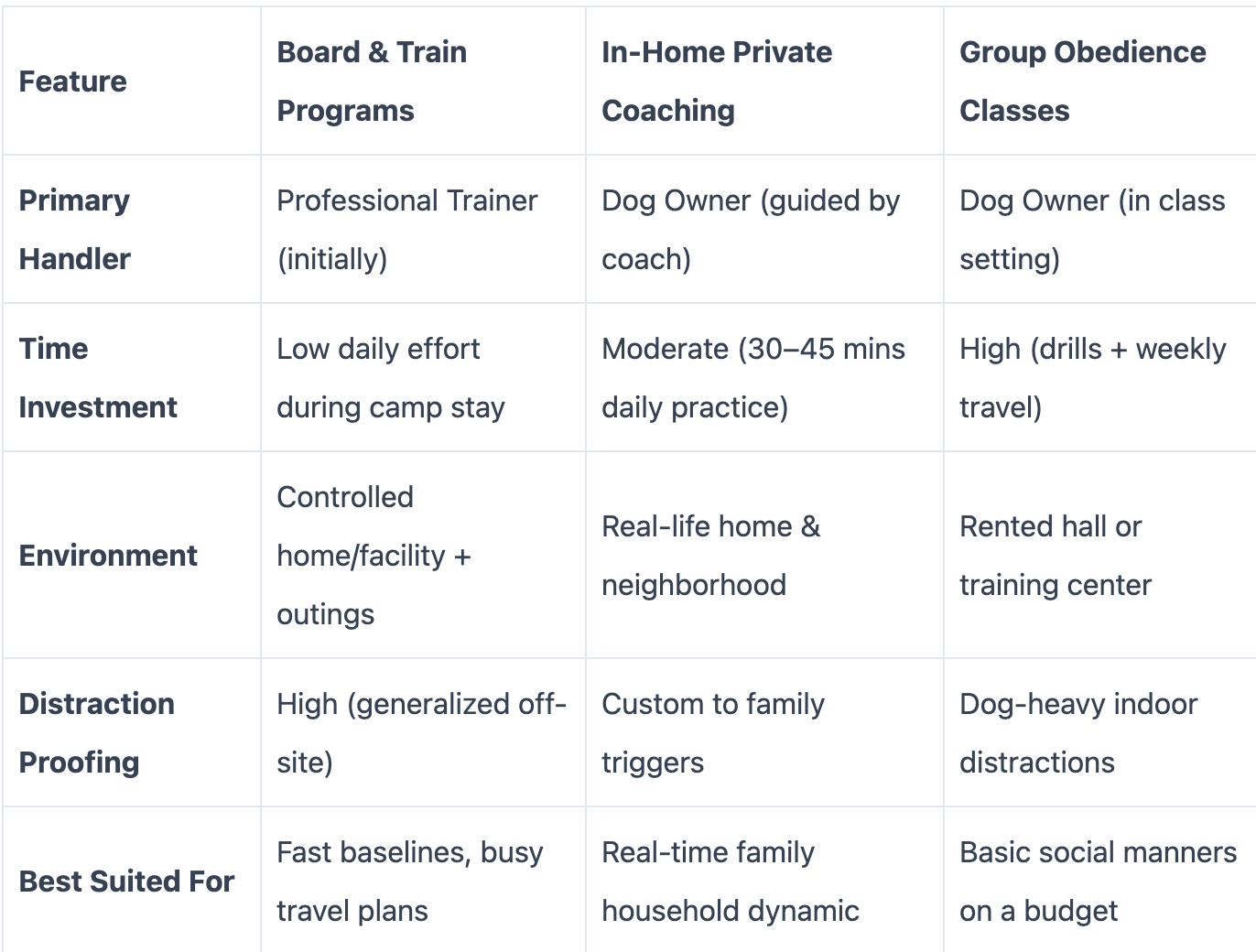
If you're already budgeting for pet care during an upcoming trip, combining those funds toward dog boarding training during your family's summer vacation dog board and training schedule is a highly efficient way to knock out boarding needs and behavior goals simultaneously. Read our practical guide to board and stay to see how other busy households navigate these logistics.
In-Home Private Coaching for Busy Families
For many households, private in-home lessons are a far better fit than group classes. Group obedience classes demand rigid weekly schedules and often force reactive or nervous dogs into close quarters with strange pets.
Private coaching fits around your family's packed calendar. A trainer comes directly to your home in Northville, Plymouth, or Birmingham to troubleshoot real-world scenarios right where they happen:
* Teaching your dog not to mob the kids when they walk through the door with backpacks.
* Stopping begging and counter-surfing during dinner prep.
* Establishing calm boundaries around the front yard fence when delivery drivers drop packages.
* Teaching all family members how to handle the leash with identical verbal markers and body language.
When to Consult a Specialized Behaviorist
Certain severe behaviors shouldn't be shipped off to a standard residential camp. If you're wondering should you send your reactive dog away, take a hard look at the root cause of the behavior.
Severe human-directed aggression, multiple bite histories, or profound separation anxiety often require clinical intervention. In these cases, working alongside a certified veterinary behaviorist ensures that underlying medical issues, chronic panic, or chemical imbalances are addressed with clinical management plans, behavior modification, and medication if needed.
What Happens When Your Dog Returns Home
The day your dog comes home is the start of phase two, not the finish line. The true test of any program is the handover process. If a trainer drops your dog off at the curb and hands you a leash without spending an hour or two coaching you through the mechanics, your dog will regress quickly.
Mastering the Post-Graduation Handover
A reputable program includes an extensive turnover session. During this lesson, your trainer will show you how to handle the leash, use precise verbal markers, and reinforce the new expectations inside your home.
Here's how to set your home up for a seamless transition during the first 72 hours:
*Maintain Crate Time:** Don't abandon the crate immediately. Keep up the quiet rest schedule your dog practiced during camp.
*Protect Thresholds:** Make your dog wait calmly before bolting through exterior doors or hopping out of the car.
*Enforce the "Place" Cue:** Use a designated cot or bed during hectic family times, like morning school prep or dinner, to keep your dog out of trouble.
*Unify the Family:** Ensure every adult and child in the home uses the exact same verbal cues and rules. Inconsistency invites testing.
Sustaining Good Habits for the Long Haul
Dog training is a lifestyle, not a one-time transaction. To maintain clear behaviors, continue reinforcing positive choices with praise, play, food rewards, and clear boundaries. When you stay consistent, the skills your dog learned at camp will evolve into reliable, lifelong habits that make living with your dog an absolute joy.
Frequently Asked Questions About Residential Training
How long does an immersion program usually take?
Most standard programs run for two to three weeks. Complex behavioral cases or advanced off-leash obedience goals may require four or more weeks. This timeframe gives the trainer enough repetitions to build muscle memory, proof distractions in various environments, and condition calm resting habits.
Can an immersion stay cure my dog's reactivity?
It won't instantly "cure" reactivity, but it lays a powerful foundation. Sending your reactive pup to camp allows a professional to establish impulse control, focus, and leash neutrality away from your home triggers. Once those foundations are solid, the trainer teaches you how to maintain those boundaries and manage triggers during your daily neighborhood walks.
How do I maintain new behaviors once my dog is back home?
Stick to the structure provided by your trainer. Use the same verbal markers, hold firm on doorway manners, avoid giving unearned free rein of the house right away, and practice short 5-minute training drills every day during meal times.
Building Lasting Harmony With Your Family Dog
A residential immersion program can be an incredible asset for busy households looking to build clear communication and reliable manners. When paired with committed follow-through at home, it turns daily chaos into calm cooperation.
At Joey Luke's Dog Training, we help families across Livonia, Novi, Canton, Farmington Hills, Royal Oak, Ann Arbor, and nearby Detroit suburbs find real peace of mind with their pets. Whether you need an immersive foundation or private coaching that fits around soccer practice and work meetings, we're here to help you build a confident, reliable companion. Explore our Joey Luke's Dog Training dog boarding and training programs today to get started.
