
Find the Right Puppy Program for Your Dog
A puppy program can mean anything from a six-week manners class for a family pet to a 12- to 18-month path for future service, guide, or detection dogs. To choose one, start with your goal:
1. Family companion: Look for early socialization, house training, leash skills, recall, and calm behavior around kids and visitors.
2. Structured training support: Choose private lessons or a board and train program if your schedule is packed or your puppy is already practicing tiny chaos goblin behavior.
3. Working-dog or volunteer path: Expect a longer commitment, detailed progress tracking, and training focused on public confidence, obedience, or specialized tasks.
The best program gives your puppy clear routines while teaching you how to keep those skills going at home. At Joey Luke's Dog Training, we serve families in Livonia, Michigan, and surrounding Detroit suburbs with private lessons and board and train programs, using a balanced approach that may include or recommend electronic collars when they're appropriate for the dog and family.
I'm Joey Johncox, and I started training dogs more than a decade ago through rescue work with dogs at high risk of euthanasia. That experience, plus helping hundreds of dogs and families build better habits, shapes how I look at every puppy program: clear training, practical support, and a plan that fits real life.

How to Choose the Right Puppy Program for Your Goals
Navigating the wide world of dog training can feel overwhelming when you're sorting through different formats, goals, and training philosophies. A working dog heading into explosive detection needs a completely different foundation than a golden retriever puppy whose main job is hanging out calmly with toddlers in a busy living room.
When you know what each format delivers, picking the right setup becomes simple. Reading through How to Choose the Best Puppy Foundation Training and Preschool helps clarify what your household needs right away.
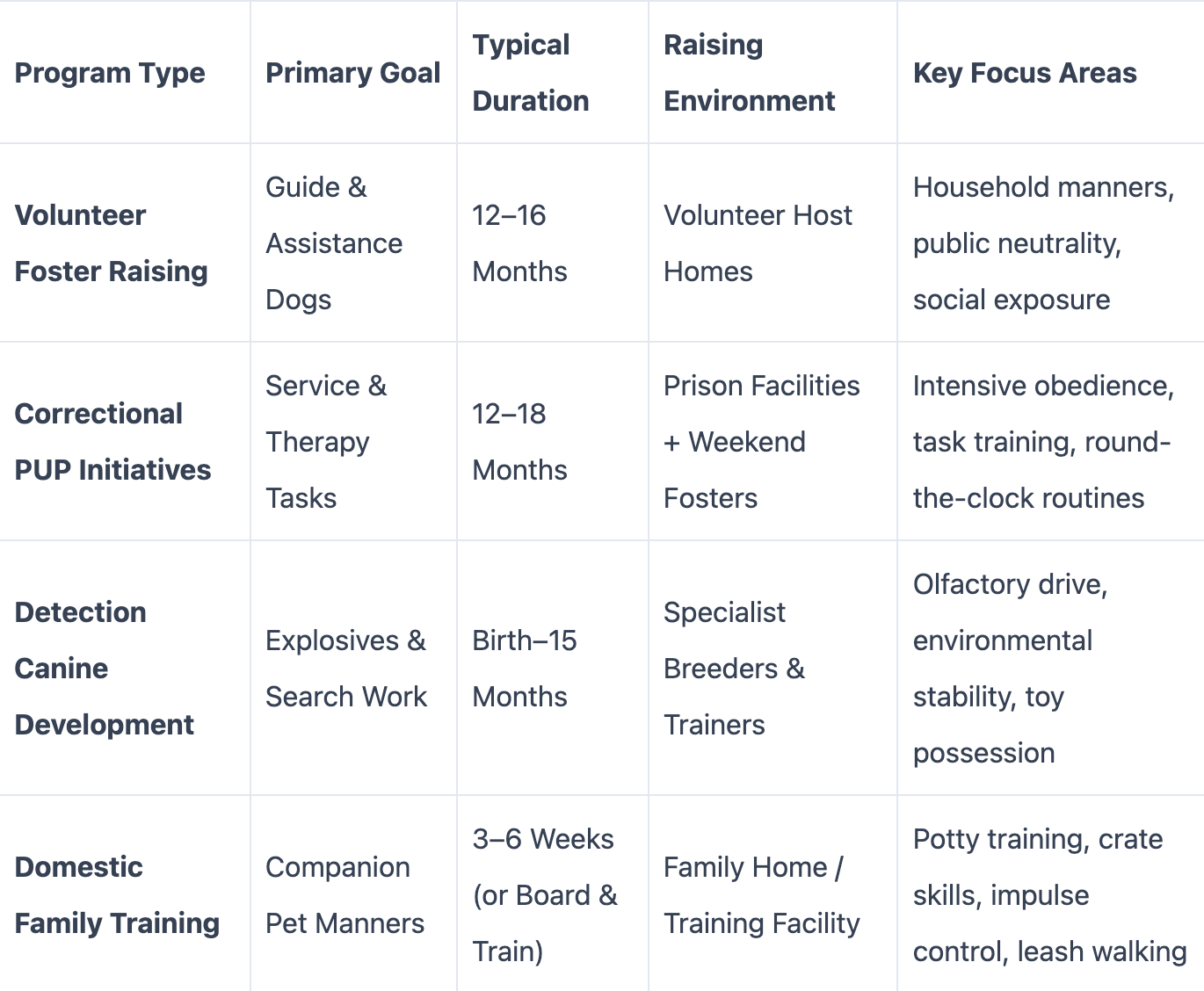
Distinguishing Volunteer Raising from Domestic Training Classes
Volunteer host families take on young puppies around seven to eight weeks old. They keep those pups for well over a year to prepare them for advanced guide or assistance organizations. That setup demands daily obedience, puppy club meetings, and careful community outings.
If you're raising a family pet, you don't need a year-long volunteer commitment. You need practical manners that fit your daily schedule. Pet parents often start with foundational group classes, and demystifying the puppy kindergarten curriculum shows how early socialization sets up basic manners.
At home, you'll want to focus immediately on crate routines and clear boundaries. Our guide on the ultimate no-stress guide to puppy house training breaks down how simple timing prevents common indoor accidents.
Actionable Tip: Instead of letting your pup roam the house freely between play sessions, use a "work-rest-potty" loop. Take them out immediately after crate time, reward outdoor success, engage in supervised engagement for 30 minutes, and return them to their crate with a chew toy. Predictable structure cuts down housetraining accidents instantly.
Understanding Career Change and Adoption Placement
Not every puppy born into a specialized working track finishes the course. Some develop minor joint sensitivities, while others show a soft temperament or simply prefer chasing butterflies over searching luggage for explosive odors.
When a dog gets disqualified from service work, they undergo a "career change." The volunteer puppy raisers who poured months of effort into the dog usually get the right of first refusal to adopt them as a permanent family pet. If the raiser passes, these thoroughly socialized, well-mannered young dogs are placed with loving adoptive families or transitioned into lower-stress roles like therapy or search-and-rescue support.
Why Prison Puppy Raising Initiatives Produce Outstanding Service Dogs
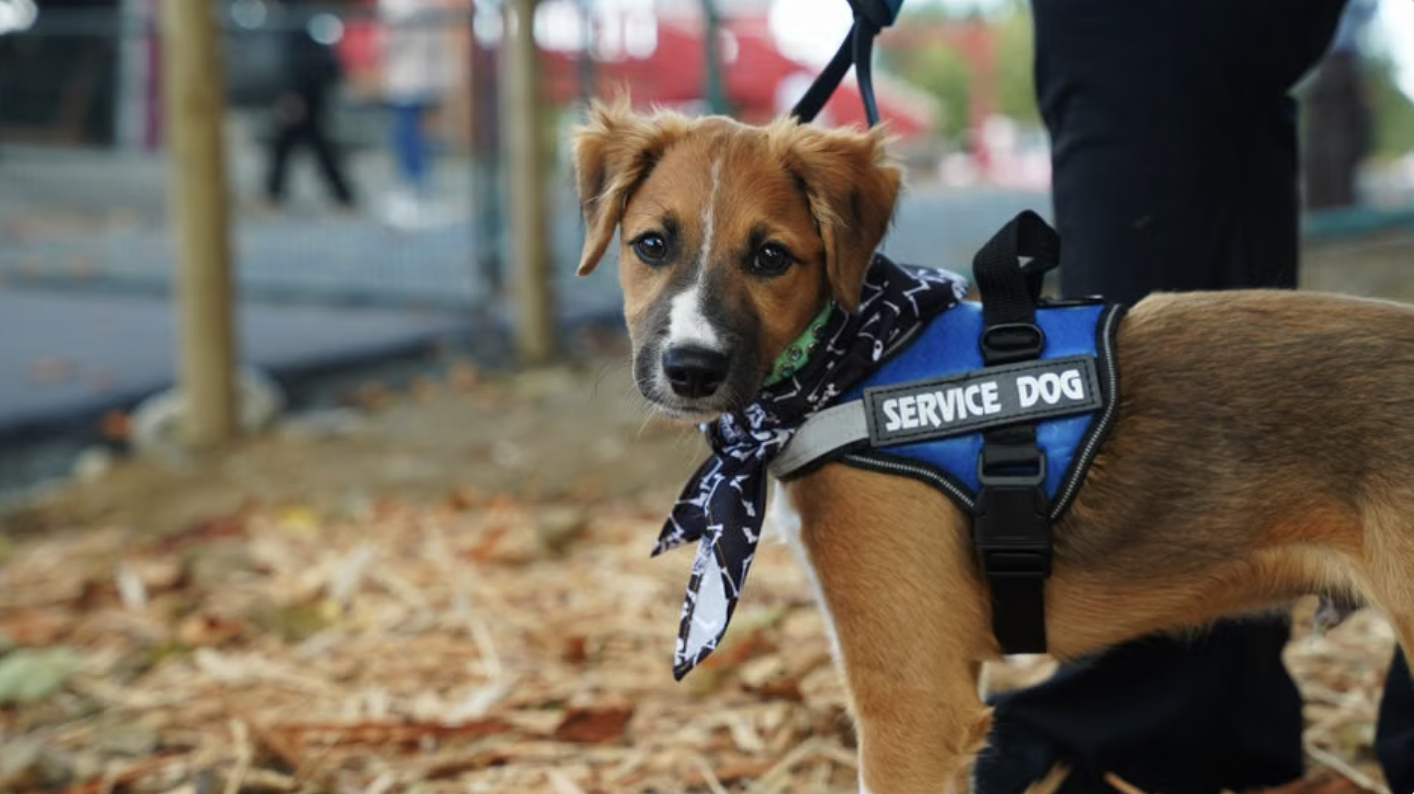
One of the most effective methods for developing service animals involves correctional facility partnerships. In programs run by organizations like America's VetDogs and NEADS, puppies arrive at correctional facilities at eight to nine weeks of age in small groups.
Incarcerated handlers are chosen through strict screening, including behavioral records, interdisciplinary staff reviews, and written applications. The puppies live alongside a primary handler and a backup handler inside the facility, getting 24-hour supervision and daily routine work. Professional instructors visit weekly to run multi-hour classes, review homework, and monitor milestones.
The numbers speak for themselves. In fact, 95% of NEADS Service Dogs in Training spend time in a prison facility at some point during their development. Because these dogs receive constant structure, clear handling, and zero unsupervised bad habits, they develop exceptional focus.
Statistics show prison-raised dogs are usually so skilled they can go through their final formal training process in half the normal time of a standard home-raised dog.
These initiatives deliver life-changing benefits on both ends of the leash:
*Life Skills and Vocational Training:** Handlers study canine health, grooming, and behavioral science. Programs like the [Puppies for Parole |Missouri Department of Corrections initiative partner with the U.S. Department of Labor, allowing handlers to earn animal handling apprenticeship certificates recognized in all 50 states.
*Saving Shelter Lives:** Since the program started in 2010, more than 7,000 dogs have graduated from training and have been adopted, drastically lowering euthanasia rates across local rescue partners.
*Safer Facility Climate:** Having dogs on-site softens the correctional environment, reduces daily tension, boosts inmate mental health, and improves overall facility morale.
The Essential Role of Volunteer Raisers and Weekend Fosters
While a correctional facility offers a structured, distraction-free environment for foundational drills, puppies can't spend their entire developmental window behind secured gates. They'd become institutionalized and struggle with real-world stimuli like heavy highway traffic, storefront sliding doors, and grocery store carts.
That's where weekend puppy raisers and full-time foster families step in. On Friday afternoons, volunteer raisers bring the pups into their homes to navigate everyday life. If your own pup gets overwhelmed during summer outings, our breakdown on how got a wild summer puppy? how socialization can save your sanity offers practical strategies for managing environmental overstimulation.
Volunteer raisers teach critical public skills:
*Real-World Habituation:** Puppies practice calm settles on buses, ride in elevators, and ignore dropped food at outdoor cafes.
*Public Etiquette Rules:** Under the Americans with Disabilities Act (ADA), puppies in training do not have automatic public access rights like certified service animals. Handlers must ask business managers for permission before entering stores, teaching the puppy polite neutrality in customer spaces.
*Safety and Health Protocols:** Organizations like The Seeing Eye back their volunteer network with 24-hour emergency lines and full veterinary coverage, ensuring young dogs stay healthy throughout their 12- to 16-month foster stay.
Actionable Perspective Shift: Socialization doesn't mean your puppy needs to greet every person or dog they see. True socialization is teaching your puppy to stay relaxed and neutral while the world moves around them.
Specialized Working Paths Versus Family Pet Foundations
Preparing Working Canines in a Detection Puppy Program
Due to an ongoing national shortage of bomb-detection canines, programs like the AKC Patriotic Puppy Program – American Kennel Club focus on breeding and raising working candidates. These programs prioritize field-trial lineages of Labrador Retrievers and German Shorthaired Pointers for their high energy, hunting drive, and environmental stability.
As outlined in What to Expect When You Participate in the AKC Patriotic Puppy Program, trainers and breeders work under expert mentorship from whelping through 15 months of age. The training revolves around seven pillars: environmental stability, socialization, reward object engagement, olfactory acuity, search games, physical conditioning, and structured play.
Early on, the focus stays on the mechanics of sniffing rather than targeting specific chemical scents. During teething, handlers stop intense tugging and twisting games to protect sensitive gums while preserving the pup's drive to possess reward objects. By 12 months old, these dogs easily conquer complex 10- to 12-minute search problems across uneven playground equipment and noisy train platforms.
Building Foundation Manners in an AKC S.T.A.R. Puppy Program
For families raising a companion, the AKC S.T.A.R. Puppy – American Kennel Club program delivers an organized, achievable roadmap. Running as a six-week introductory course led by an approved evaluator, it covers owner communication, handling, basic obedience, and social neutrality.
Both purebred and mixed-breed dogs (registered via AKC Canine Partners) can participate. Passing the 20-step evaluation earns a certificate and serves as the direct stepping stone to the Canine Good Citizen (CGC) title. If you're planning a vacation, choosing a residential program outlined in sleepaway camp for canines: a guide to residential puppy training can build these exact foundation manners while you're away.
Frequently Asked Questions About Puppy Raising and Training
How long does a puppy usually stay in a specialized raising program?
Puppies enter specialized service or detection programs at seven to nine weeks of age and remain with their puppy raisers or prison handlers until they reach 12 to 18 months old. Once they reach physical and behavioral maturity, they return to the training headquarters for three to six months of advanced task instruction before official client placement.
What happens if a puppy does not meet the criteria for service or detection work?
When a puppy is released from a working path due to health or temperament, the organization offers adoption first to the volunteer who raised them. If the raiser cannot keep the dog, the organization places the dog into a pre-screened companion home or redirects their skills toward search-and-rescue or therapy work.
Can pet owners apply the techniques used in working dog programs at home?
Yes. You can borrow the best habits from working dog programs by keeping a predictable crate schedule, rewarding eye contact, practicing marker words, and setting fair boundaries.
When you use consequence-based tools like electronic collars, remember they have a valid place in a balanced system for clear communication. However, using them incorrectly can cause long-term confusion or stress. You'll get the best results by teaming up with an experienced professional who can show you how to layer these tools properly over solid obedience foundations.
Start Building Real-World Manners with Your Puppy
Raising a puppy takes patience, consistency, and clear communication from day one. You don't have to tackle the biting, potty accidents, and leash pulling on your own.
At Joey Luke's Dog Training, we serve families in Livonia, Michigan, and surrounding Detroit suburbs—including Plymouth, Canton, Northville, Novi, Farmington Hills, and Ann Arbor. We specialize in helping busy households with kids and dogs turn stressful, unpredictable habits into calm, dependable obedience.
If you've already set aside a summer travel boarding budget, our immersive board and train programs let us build reliable obedience foundations while you're traveling. If your week is packed with sports practices and work meetings, our private lessons give you customized, one-on-one instruction that fits your schedule far better than rigid group classes.
Let's make living with your dog easy and enjoyable. Check out our Puppy Training options today, and let's get your puppy on the path to becoming the calm, well-mannered companion your family deserves.
