
What Early Socialization Means for Your New Dog
Early socialization isn't just about letting your puppy run wild with other dogs. It's the intentional process of introducing your puppy to new sights, sounds, surfaces, people, and fellow canines in a controlled, safe environment.
The prime window for this learning happens early, usually between 8 and 16 weeks of age. Guidelines from the American Veterinary Society of Animal Behavior emphasize that starting early socialization classes between 8 and 10 weeks of age allows your pup to build positive associations before fear periods peak.

During structured play, puppies learn essential life lessons:
- Bite Inhibition: Puppies learn how soft their bite must be through feedback from playmates. If a puppy bites too hard, their playmate yelps and stops playing.
- Canine Communication: Young dogs learn to read subtle body language, such as play bows, lip licks, and peaceful pauses.
- Novel Exposure: Getting exposed to weird surfaces, novel sounds, and people wearing hats or carrying umbrellas prevents adult anxiety.
Actionable Tip: Shift your perspective on socialization. Socialization doesn't mean your dog must greet every person or dog they see. True socialization creates a calm dog who can observe the world quietly without getting overwhelmed.
How to Find the Best Puppy Socialization Near Me
When searching for puppy socialization near me, focus on quality over convenience. Unsupervised or chaotic play environments can actually teach puppies bad habits or create lifelong fear.
To make an informed choice, check out our guide on How to Choose the Best Puppy Foundation Training and Preschool.
Here's what to check before enrolling in any program:
1. Positive Reinforcement Methods: Ensure trainers use reward-based methods rather than harsh corrections, prong collars, or shock tools.
2. Trainer Credentials: Look for certified professional dog trainers who understand canine developmental stages.
3. Strict Health Rules: Facilities must check vaccination records before the first class to keep everyone safe.
4. Age and Size Grouping: Play groups should separate dogs by size, age, and play style so small or timid puppies don't get trampled.
Actionable Tip: Always ask to observe a class before signing up. If you see over-aroused puppies barking endlessly while trainers sit back, walk away. Good trainers interrupt play frequently to keep energy levels low and balanced.
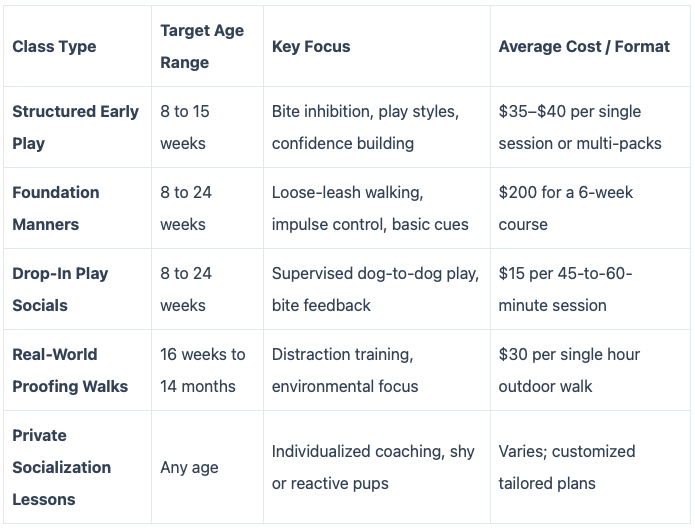
Comparing the 5 Best Types of Puppy Socialization Classes
Choosing the right format depends on your puppy's current age, temperament, and your household schedule.
Finding Structured Puppy Socialization Near Me for Young Pups
For puppies between 8 and 15 weeks old, short, coach-led play sessions work wonders. These classes typically run for 45 minutes to prevent young puppies from getting overtired or over-stimulated.
In these focused environments, trainers carefully match puppies by play style rather than just weight. A timid Great Dane pup might pair better with a calm French Bulldog than a bouncy terrier. To explore options tailored for young companions, look into structured Puppy Training options that prioritize gentle exposure.
Actionable Tip: If your puppy hides behind your legs during class, don't force them into the play pile. Let them watch from your lap while enjoying high-value treats so they associate the room with safety.
Multi-Level Puppy Foundation and Manners Courses
As puppies grow into their teen weeks (up to 24 weeks), structured foundation courses add basic obedience to the mix. These 6-week programs balance play breaks with real-life manners like sit, down, leave it, and loose-leash walking.
Learning self-control around distractions prevents your dog from becoming a teenager who reacts wildly every time they see another dog on a walk. Comprehensive Puppy Training builds a reliable communication system between you and your pup before adolescent rebellion kicks in.
Actionable Tip: Practice short, 2-minute training sessions at home right before mealtime. A hungry pup focuses better on learning loose-leash positioning and polite greetings.
Drop-In Socials for Targeted Play Skills
Drop-in socials offer flexible scheduling for busy families who can't commit to a fixed 6-week schedule. Typically priced around $15 per session, these open-enrollment groups focus heavily on supervised play and confidence-building exercises.
If you're curious about how play groups compare to day camps, read our article Tired Pups Are Well-Behaved Pups: Best Puppy Play Groups and Day Camps to weigh your options.
Actionable Tip: Avoid letting your puppy greet other dogs on a tight leash right before class starts. On-leash greetings build tension and set a hectic tone for the session.
Outdoor Real-World Proofing Walks
Teenage dogs aged 6 to 14 months often act like little tornadoes. They've mastered commands inside your living room, but their brains melt when they step outside around squirrels, bicycles, and other dogs.
Group campus walks bring training outdoors. These 1-hour sessions teach your dog to pay attention to you despite novel scents and moving distractions. If your adolescent dog struggles with outdoor focus, dedicated Dog Training Lessons help bridge the gap between classroom practice and real-world behavior.
Actionable Tip: Switch up your walk routes daily. Exposing your adolescent dog to fresh scents mentally tires them out faster than walking the same boring street block three times.
Private Lessons and Specialized Behavior Support
Group classes aren't ideal for every dog. If your puppy growls, freezes in terror, or barks frantically at other dogs, placing them in a group play environment can worsen their fear.
Private lessons give shy or reactive puppies dedicated space to learn without feeling threatened. Personalized Training Classes for Dogs allow trainers to customize every exercise to your dog's specific emotional pace. Private lessons also fit busy family schedules far better than rigid group class times, letting you schedule sessions around kids' sports and work routines.
Actionable Tip: Stop treating fear with forced exposure. If your pup trembles near new people, ask visitors to toss treats past the puppy without making eye contact or trying to pet them.
What to Expect When Booking Puppy Socialization Classes
Before stepping into any quality training facility, you'll need to submit health paperwork and pack proper gear.
Here is what facilities typically require before your first session:
- Vaccination Records: Puppies under 16 weeks need proof of at least their first round of Distemper/Parvo and Bordetella vaccines. Puppies over 16 weeks must show proof of Rabies vaccination.
- Veterinary Health Checks: Clear fecal tests ensure parasites aren't shared across the training floor.
- Equipment Requirements: Bring your pup on a flat collar or standard Y-harness attached to a 6-foot non-retractable leash. Leave flexi-leashes at home because they reduce control and cause leash burns.
- High-Value Rewards: Pack tiny, pea-sized treats like soft chicken, freeze-dried liver, or cheese. Bland kibble won't hold attention in a room full of fun playmates!
- Cancellation Policies: Most facilities mandate a 24-hour cancellation notice to reschedule drop-in spots without losing your session fee.
Actionable Tip: Prepare your treat pouch before leaving the house. Trying to open noisy treat bags while managing an excited puppy on a leash creates unnecessary stress right at the facility door.
Frequently Asked Questions About Puppy Socialization
At what age can my dog attend puppy socialization near me?
Puppies can safely begin attending structured socialization classes as early as 8 to 10 weeks of age. Medical consensus confirms that early socialization in clean, controlled environments far outweighs the risk of infection when proper initial vaccine protocols are followed.
How do structured play classes differ from doggy daycare?
Structured socialization classes are coach-led sessions where owners participate alongside their pups. Trainers actively guide play, introduce enrichment stations (like low ramps and puzzle mats), and mandate frequent rest breaks to prevent over-arousal. Unstructured daycare or open dog park settings lack this tailored oversight, which often leads to poor play manners or bullying.
What options exist if I need financial assistance for classes?
Many nonprofit community organizations offer financial assistance, sliding-scale pricing, or discounted multi-class packages for families facing budget limits. Look for local rescue groups or community-focused behavior organizations that offer subsidized foundation courses so every family can access ethical training.
Building Lifelong Good Manners With Expert Training
Finding effective puppy socialization near me sets the stage for a calm, confident companion who fits smoothly into your family life. Joey Luke's Dog Training serves families in Livonia, Michigan and surrounding Detroit suburbs, specializing in households with children and dogs, offering board and train programs and private lessons.
We focus on transforming unpredictable, stressful pets into well-behaved companions through practical, real-world routines. For families planning summer vacations, our board and train programs align right with existing summer travel boarding budgets, giving your dog expert full-time immersion while you enjoy your family trip. If you prefer hands-on guidance at home, our private lessons fit busy family schedules better than traditional group classes, keeping your household calm and coordinated.
Ready to start your young dog off on the right paw? Explore our comprehensive Puppy Training options today, and let us help you build a peaceful, reliable relationship with your dog!
