
A Mom’s Practical Guide to Board and Stay Dog Training
What Exactly Happens When Your Dog Goes to Boarding Camp?
Between packing lunches, hunting down missing soccer shin guards, and keeping the household running, none of us have four spare hours a day to become full-time dog trainers. That is where board and stay dog training comes in. Think of it like sending your dog off to an intensive, immersive camp where they live right alongside a professional trainer to master daily household manners, solid obedience, and impulse control through predictable, daily practice.
Instead of lounging on the rug scheming up ways to steal a butter stick off the counter, your pup steps into a home built around clear expectations and reliable structure. From breakfast time until bedtime, every doorway, meal prep session, and backyard distraction turns into a teachable moment. It takes the guesswork out of the equation and gives your dog the crystal-clear consistency they need to become a calm, turnkey member of your busy family.
How Is This Different from Regular Boarding Down the Road?
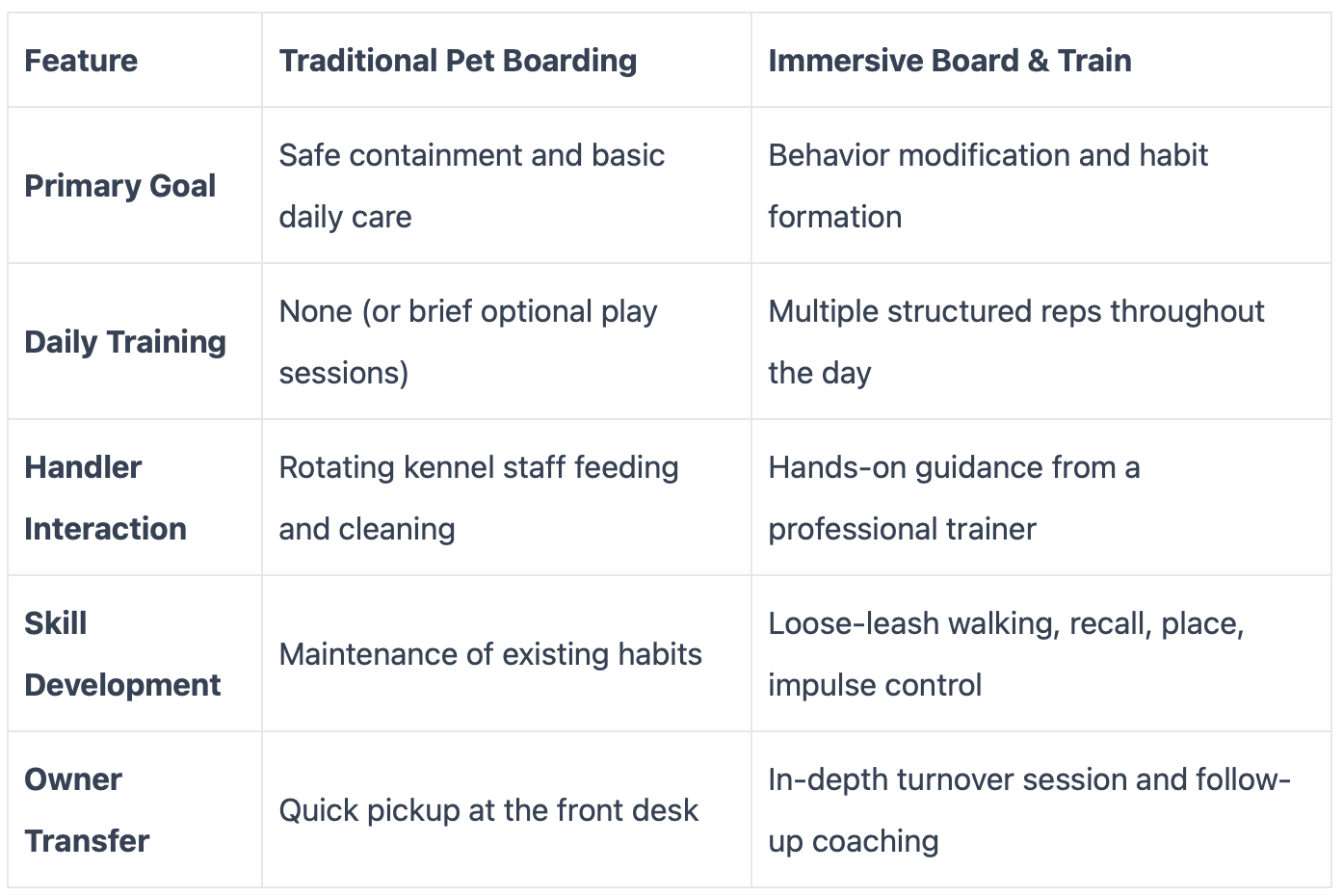
Traditional pet kennels keep your dog safe, fed, and let out for potty breaks. That works just fine when you're heading up north for a weekend getaway and just need a safe place for your pup to snooze. But standard kennels do not teach your four-legged buddy how to stop dragging you down the sidewalk or tackling the kids when they walk through the garage door.
In fact, sitting around in an unstructured kennel can sometimes make habits like demand barking or fence running even worse. That's why understanding the truth about board and trains for dogs helps set realistic expectations before booking. An immersive program pairs secure care with hands-on, hourly repetition that turns chaotic impulses into reliable manners.
Teaching the Kind of Manners You Actually Need on a Tuesday Night
Real-world dog manners aren't about stiff circus tricks. Nobody has time to teach their dog how to balance a treat on their nose; you just need them not to bowl over a toddler holding a bowl of macaroni.
We focus on the functional, sanity-saving boundaries that make daily life smoother:
- Threshold manners: Waiting patiently at front doors, crate gates, and minivan sliders until released so nobody bolts out into the street.
- Reliable recall: Turning around and sprinting back into the house the first time you call, even if a squirrel just scampered along the privacy fence.
- Drop it and Leave it: Dropping stray socks, dropped school snacks, and chew toys without initiating a high-speed game of keep-away under the dining table.
- The Place command: Heading to a designated cot or mat and staying there quietly while you cook dinner or help with math homework.
Practicing these practical skills dozens of times a day in a home environment builds true muscle memory. Taking the time to do some research on finding a trusted board and train program for your dog ensures your family gets a calm, reliable companion you can actually enjoy.
How Sending Your Pup to Camp Saves Your Sanity During Back-to-School Season
Late August hits like a freight train every single year. You are juggling back-to-school night, new bus schedules, after-school sports carpools, and mountains of paperwork. Trying to manage all of that while wrestling an energetic pup who barks at the bus brakes and tangles the leash around your ankles turns morning routines into pure survival mode.
Enrolling your dog in an immersive training camp during late summer or early fall is a clever way to redirect your family's existing summer travel boarding budgets into a permanent lifestyle upgrade. While you help the kids settle into their new fall rhythms, your pup gets an intensive educational reset. They return home ready to slide effortlessly into your daily schedule instead of demanding the last bit of energy you have left.
A Peek at the Daily Schedule: Brain Games, Structured Crates, and Real Rest
A lot of folks assume high-drive dogs just need six straight hours of non-stop sprinting at the dog park. But an overtired dog acts an awful lot like a cranky toddler who skipped their afternoon nap: hyper, whiny, and making zero good choices.
A great camp routine balances physical activity with mental quiet:
1. Morning structured walk: Practicing loose-leash positioning and impulse control before the neighborhood wakes up and gets noisy.
2. Decompression sniff walks: Exploring natural trails on a long lead so natural scents can lower heart rates and burn off mental energy.
3. Targeted training intervals: Short, focused five-to-fifteen-minute sessions using clear markers and food rewards to nail down core cues.
4. Scheduled crate rest: Structured quiet time with frozen Kongs or lick mats to build independent self-settling habits.
5. Evening household integration: Practicing calm place stays while dinner gets cooked, dishes get loaded, and normal household bustle happens.
This predictable rhythm gives dogs a built-in "off-switch." They learn that resting quietly in their crate is their cozy, default state whenever nothing active is happening.
What to Do When Your Sweet Puppy Turns into a Rebel Teenager
Right around six to nine months, your angelic puppy suddenly looks at you like you are speaking a foreign language. They develop selective hearing, jump on guests, and test every boundary in sight.
Teenage regression is completely normal, but it can leave even the most patient parent feeling fried. During this rowdy adolescent phase, dogs need clear boundaries paired with fair consequences. Consequence-based training can have a valid, necessary place in helping an adolescent dog understand exact boundaries. However, incorrect use of training tools can cause long-term harm or confusion. That is why working with an experienced professional matters so much. A skilled trainer knows how to introduce balanced tools properly without creating stress. If you are ready to trade teenage chaos for cooperation, choosing the best dog board and train program for fast results lets you nip those stubborn habits in the bud before they harden into adult problems.
Getting Your Pup Packed and Ready for Their Big Stay
Just like sending your child off to sleepaway summer camp, residential dog training programs have baseline requirements to keep every dog safe, healthy, and ready to learn.
A quality trainer will always check your dog's temperament, health history, and baseline readiness first. The goal is to set your pup up to thrive, not drop them into an environment they aren't prepared to handle.
Checklists, Crate Skills, and Trial Sleepovers
Before loading the dog bed and food into the car, you'll want to check off a few essential items:
- Current vaccinations: Rabies, Distemper/Parvo (DHPP), and Bordetella are non-negotiable standards aligned with guidance from the American Veterinary Medical Association.
- Clean fecal test: Protecting every dog in the home from parasites requires clear veterinary screening.
- No severe aggression: General family immersion camps focus on foundation manners and impulse control rather than severe human- or dog-directed aggression rehab.
- Crate benchmarks: Your dog should already be able to sleep comfortably for at least 6 hours overnight in a crate and rest quietly for about 2 hours during daytime breaks.
- Trial acclimation nights: A one-night test sleepover lets your dog settle in and proves they can handle the change of scenery without separation panic.
If your pup still grumbles about their crate at home, start feeding their breakfast and dinner inside the open crate this week. Making that space feel rewarding and cozy before camp starts makes drop-off day a breeze.
Setting Realistic Expectations (and Budgeting Wisely)
Investing in residential training isn't about waving a magic wand; it's about putting in the heavy repetition your busy schedule doesn't allow for right now.
Top-notch programs include structured field trips, exposure to real distractions, and thorough parent coaching at pickup. While cut-rate options might look appealing on paper, cutting corners often results in stressful kennel environments or rushed, harsh handling. Digging into whether is a cheap board and train for dogs actually worth it will save you serious money, time, and headaches down the road. Look for transparent programs with clear communication and proven track records.
Answering the Big Questions Every Busy Parent Asks
How long are typical programs and how much do they cost?
Most comprehensive puppy and foundation manners camps run for two full weeks. That gives the trainer enough time to build new habits, test them around distractions, and lock them in. A standard two-week foundation camp runs around $2,500, covering full-time residential boarding, daily training, gear fitting, and hands-on owner coaching.
Trial acclimation nights are generally around $125. For returning adolescent dogs who just need a boarding stay with a quick manners tune-up, daily rates sit around $125 per night, with customizable add-ons available:
- Short-stay add-on (6+ nights): Around $225 for 1.5 to 2 hours of focused work on 3–4 specific nuisance behaviors.
- Extended-stay add-on (10+ nights): Around $450 for 3 to 3.5 hours of training plus 2 off-site practice outings in high-distraction public settings.
Will my dog still remember and listen to me when they get home?
Yes, as long as you follow the easy home roadmap we hand you at pickup! Dogs learn based on context. They learn how to behave with the trainer, and during your turnover lesson, we teach you exactly how to get that same calm cooperation at home.
We utilize a balanced training approach and may use or recommend electronic collars as an effective, clear communication bridge. When introduced by an experienced professional, an e-collar acts like a gentle tap on the shoulder rather than a punishment. It lets you give clear, low-level feedback without shouting across the yard while the kids are playing.
What kind of follow-up support happens after graduation?
Training doesn't stop the moment you pull out of the driveway. A great program gives you the tools and support to succeed at home:
- A comprehensive, 40-to-60-minute in-person turnover lesson at pickup where you practice the cues.
- Helpful video tutorials and digital guides you can revisit whenever you need a quick refresher.
- In-person or virtual follow-up sessions 2 to 3 weeks after camp to fine-tune your home routine.
- Direct phone and email access so you can troubleshoot any transition bumps with your trainer.
Getting Back to Peaceful Evenings with a Turnkey Family Dog
Keeping up with kids, household chores, and work deadlines is a full-time job. You shouldn't have to spend your precious evening hours refereeing counter-surfing, leash-tugging, or doorway darting.
At Joey Luke's Dog Training, we help families across Livonia, Michigan, and surrounding Detroit suburbs, including Northville, Novi, Plymouth, Canton, and Ann Arbor, transform rambunctious pets into calm, dependable family dogs. We use a balanced training approach designed specifically for busy households with children. If trying to carve out time for weekly group classes feels impossible on your packed calendar, our tailored private lessons and comprehensive dog boarding training programs deliver fast, lasting results right when your family needs them most. Reach out today to schedule an evaluation and bring some well-deserved peace back to your home!
