
What Does Board and Train Actually Look Like for Your Dog?
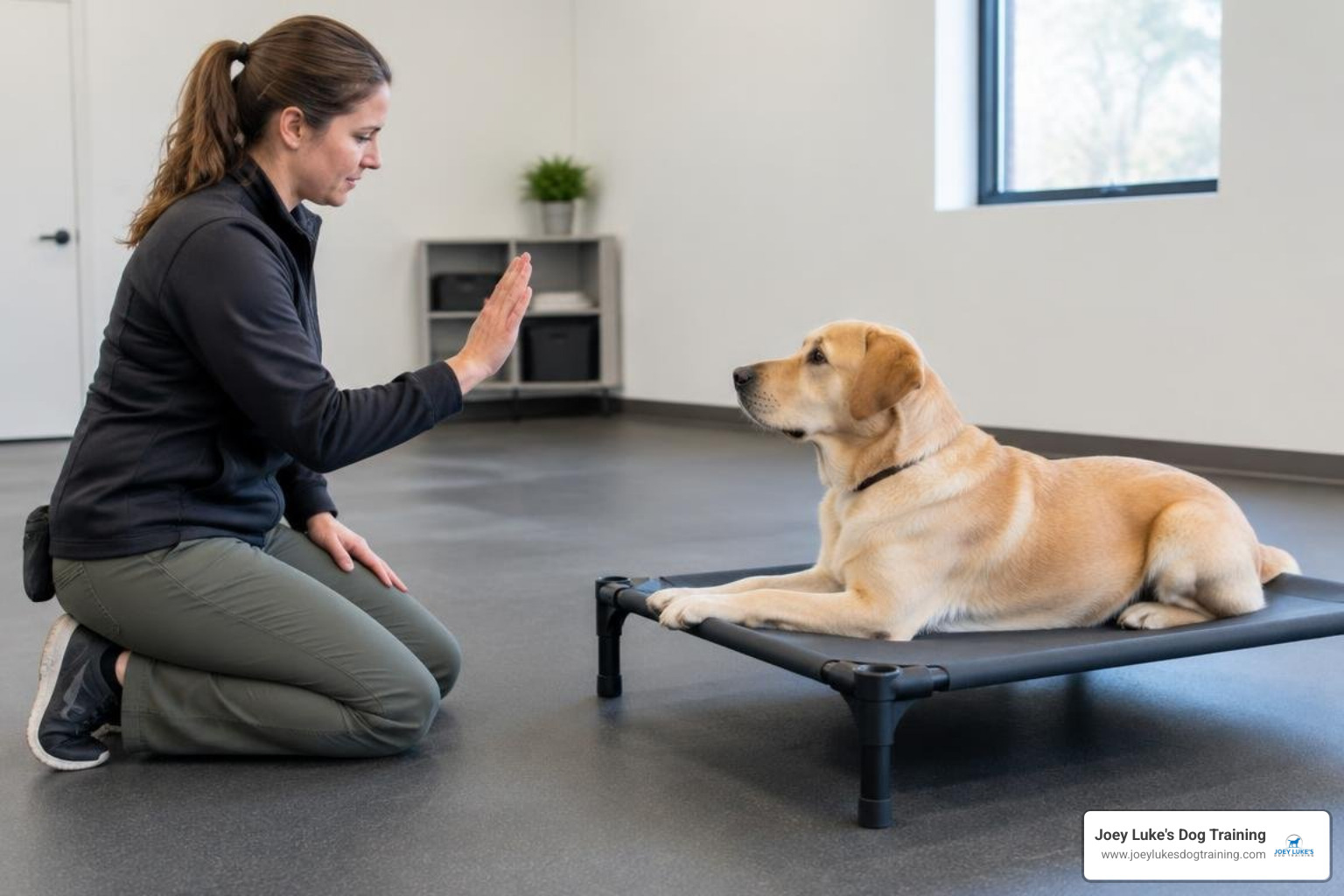
Board and train means your pup lives with a professional trainer rather than staying in your living room. During this residential stay, your dog receives round the clock structure, clear communication, and dozens of daily repetitions. Instead of trying to teach loose leash walking between soccer practices, a professional handles the heavy lifting of building those initial neural pathways.
This immersive environment eliminates the mixed signals dogs often get from busy households. When multiple family members accidentally reinforce jumping or counter surfing, progress stalls out quickly. Living in a dedicated training setting allows your dog to develop solid impulse control and calm habits before testing those skills in your bustling family space. So what is board and train for dogs really about? It's this immersion that creates the biggest difference from weekly lessons.
What Can a Board and Train Stay Look Like?
Every facility sets up its boarding structure a little differently depending on its philosophy. Some operate out of large commercial kennel facilities with dozens of dogs, while others provide boutique home style boarding where dogs live alongside the trainer. You can read a mom's practical guide to board and stay dog training to see how an immersive home environment creates realistic daily habits.
Home style settings mirror what your dog experiences every day in suburban neighborhoods like Northville, Plymouth, and Birmingham. When dogs learn manners in an actual living room, practicing around kitchen counters and patio doors, the transition back to your household happens much faster. Commercial kennel settings can also build strong skills, though they sometimes require extra transition work to help dogs understand that house rules still apply outside a kennel run.
What Might Your Dog Do on a Typical Training Day?
A good training day balances active mental work, physical movement, and essential rest periods. Nobody trains a dog for eight hours straight because canine brains fry after short bursts of intense focus. Instead, dogs participate in multiple focused training sessions throughout the day, interspersed with structured walks, potty breaks, and crate relaxation.
Impulse control drills happen constantly throughout normal routines like waiting at doorways, holding a place command, and greeting humans calmly. Downtime in a crate teaches your dog how to switch off their arousal engine and rest peacefully. Check out Dogster's breakdown of residential training options for more insight on how daily schedules shape a dog's learning curve.
How Much Could Board and Train Cost and How Long Could It Take in 2026?
Board and train programs generally range from $1,000 to $3,000 per week across the dog training industry in 2026. Total investments typically land anywhere between $800 and $4,000 or more, heavily influenced by program duration, location, and the severity of behavioral challenges. Programs in major metro areas often reflect higher operational costs than rural setups.
| Program Type | Duration | Typical Cost Range | Core Behavioral Focus |
|---|---|---|---|
| Puppy Foundations | 1 to 2 Weeks | $800 to $2,000 | Crate manners, potty schedules, basic leash walking, foundational cues |
| Core Family Manners | 2 to 3 Weeks | $2,000 to $3,500 | Reliable recall, place stay, doorway manners, loose leash walking |
| Behavior Modification | 3 to 6+ Weeks | $3,500 to $6,000+ | Leash reactivity, fear issues, resource guarding, intense arousal |
Location plays a huge role in local market pricing across southeast Michigan. Take a look at our breakdown of board and train Canton cost details to see how geographic factors shape overall program pricing.
How Does a Longer Stay Change the Investment?
A standard two week stay builds solid foundational obedience like sit, down, place, and polite walking on a leash. That timeframe gives the trainer enough repetitions to establish clear communication patterns. If you need complete off leash reliability around heavy distractions in parks across Novi or Rochester Hills, a three or four week program provides the necessary proofing.
Serious behavioral issues like fear reactivity or aggression demand longer stays of three to six weeks. Unraveling deep rooted habits requires slow desensitization and careful counterconditioning. Be cautious when evaluating cheap board and train options that promise overnight miracles for rock bottom rates, as proper care, safe facilities, and skilled handling require real resources.
What Might You Need to Budget for After Your Dog Comes Home?
Your financial planning should account for post program support to ensure your dog retains everything they learned. Most comprehensive programs bundle turnover sessions into the total package price, but extra follow up lessons typically run $75 to $200 per session. Training collars and specialized gear might also be recommended to maintain clarity during walks.
Investing in your dog while you handle summer vacation travel lets you solve two problems at once by rolling boarding expenses and training into a single budget line. Reviewing current pet training industry cost benchmarks helps you evaluate what tools and ongoing coaching make sense for your family.
Could Board and Train Work for a Busy Family?
Family life in bustling suburbs like Farmington Hills, Troy, and Royal Oak gets wild between school drop offs, sports practices, and work deadlines. Finding forty five minutes of quiet, distraction free time every single evening to drill leash mechanics feels almost impossible. Board and train removes that daily stress by letting an experienced trainer build the foundational habits first.
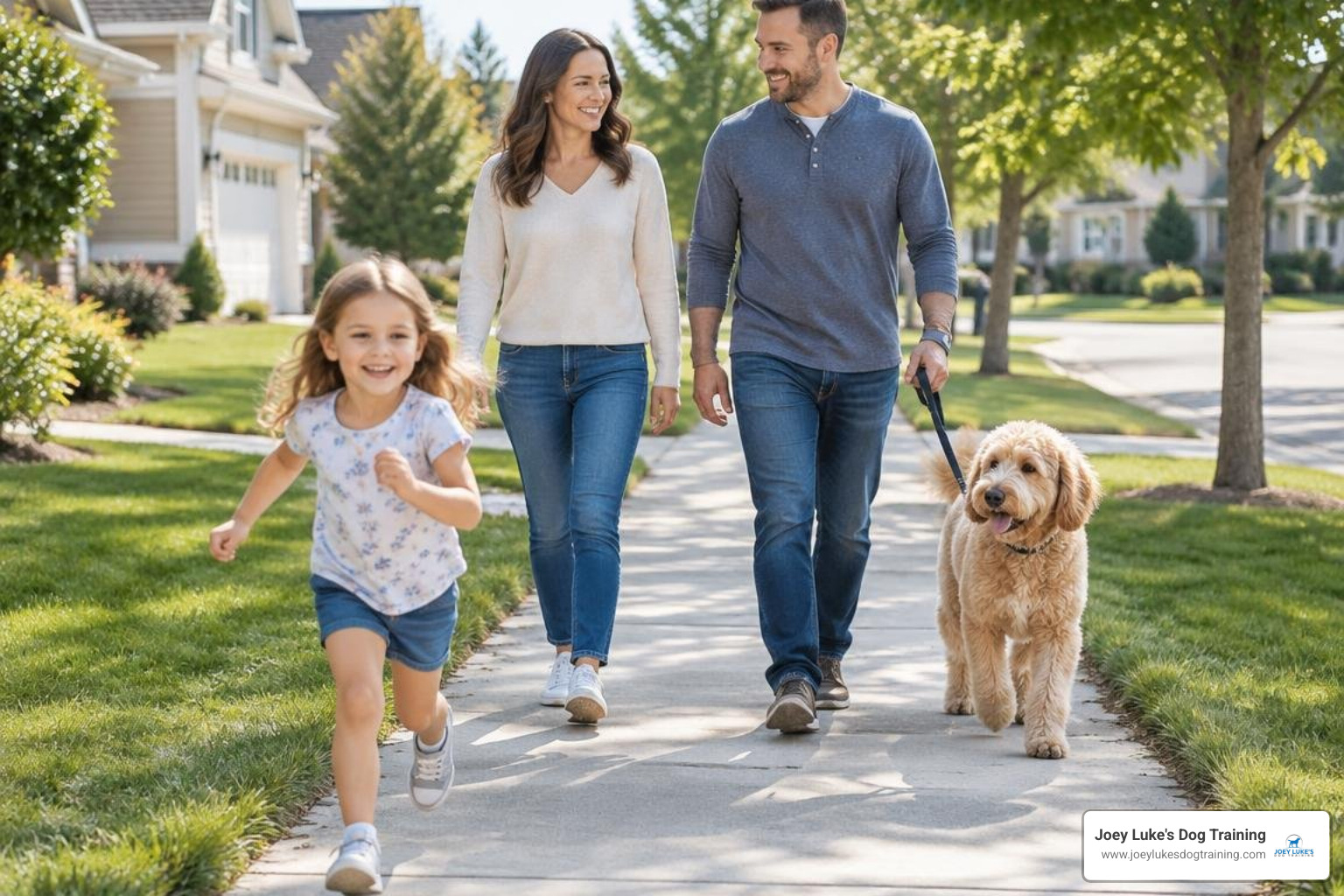
A dog getting trained twice daily, seven days a week inside a residential program covers in two weeks what might take three months of weekly private lessons. You get to skip the frustrating stage where your dog has no idea what you want. When exploring options, choosing the best dog board and train program means finding a trainer who understands real family dynamics.
Why Does Your Follow Through Matter After Your Dog Comes Home?
Your dog won't return home as a preprogrammed robot that never makes mistakes. While the trainer installs the skills, you must run the software daily in your own living room. If the dog learns that jumping is unacceptable at camp but everyone lets them jump at home, old habits return in a heartbeat.
Skills like leash walking, place stays, and threshold manners transfer beautifully when parents and kids enforce the same clear boundaries. Understanding the truth about board and train programs helps set realistic expectations about the teamwork required during the turnover process. Your consistency turns that professional foundation into lifelong good manners.
Could Private Lessons Be a Better Fit?
Board and train costs four to five times more than standard private lessons, making personal coaching an attractive alternative for many households. Private lessons allow you to learn hands on mechanics right inside your own neighborhood environment. This hands on approach gives you direct coaching on managing real time distractions like passing delivery trucks and neighborhood squirrels.
Private lessons target busy family schedules as a flexible alternative, letting you work around school events and sports on your own timeline. Reading our comprehensive board and train guide can help you decide whether your routine favors an intensive jumpstart or weekly personal coaching.
How Can You Spot a Quality Program and Avoid a Risky One?
A reputable training program operates with total transparency about daily routines, housing conditions, and training equipment. Quality trainers use a balanced training approach that pairs clear rewards with sensible guidance, helping dogs understand both what to do and what to avoid. They welcome your questions, provide clear timelines, and focus on long term family integration.
Great facilities maintain clean, secure spaces and prioritize both mental enrichment and low stress handling. They also understand that dogs need an adjustment period of three to seven days to settle into a new environment before heavy training begins. A skilled professional respects that acclimation timeline and keeps you updated on your pup's progress.
What Warning Signs Should Make You Pause?
Steer clear of any trainer who offers absolute guarantees on behavioral perfection, because living animals can't be programmed like appliances. Be wary of operations that refuse to show you where your dog will sleep or hesitate to explain their training philosophy. A lack of regular video updates during the stay is another red flag that should make you reconsider.
High volume kennels where dogs spend twenty two hours a day in isolation without human interaction won't produce a calm family companion. Explore our guide on finding a trusted board and train program for practical steps on evaluating local options across southeast Michigan.
What Should You Ask Before Enrolling Your Dog?
Ask the trainer directly about their training tools and philosophy so you feel completely confident in their care. Inquire about electronic collar education and whether collars may be used or recommended as part of a balanced communication system. Ask how many dogs are on site at once, how daily exercise is handled, and what health protocols protect against kennel cough.
Make sure you understand how the handoff process works before signing any agreement. Inquire about how many owner transition lessons are included at pickup and whether they offer follow up support if you run into roadbumps at home. A quality trainer cares just as much about coaching the humans as they do about schooling the dog.
What Do Families Often Ask About Board and Train?
Will My Dog Forget Our Family or Act Differently After Coming Home?
Your dog will absolutely remember you and will be thrilled to see you at pickup. Dogs form deep bonds with their families that don't vanish over a few weeks of school. What will change is their impulse control, their response to household boundaries, and their overall clarity around human communication.
When Is a Good Time to Enroll a Puppy or Adult Dog?
Puppies can start foundational programs once they finish their core vaccination series, usually around sixteen weeks of age. Adolescence between seven and eighteen months is a wildly popular time for enrollment, as teenage pups love testing every boundary they can find. Adult dogs of any age can attend training, though older dogs with deeply ingrained habits often benefit from slightly longer stays.
Can Board and Train Help With Severe Reactivity or Aggression?
Board and train can create massive progress with leash reactivity, resource guarding, and high arousal behaviors. An intensive environment allows a trainer to manage triggers carefully and build alternative coping skills without the chaotic variables of daily neighborhood life. Lasting rehabilitation requires owners to maintain those same management protocols and balanced training tools once the dog returns home.
Choosing the Best Next Step for Your Dog and Household
Picking the right training path comes down to your family schedule, budget, and how quickly you need behavioral changes in your home. An intensive program removes the guesswork and delivers a dog who understands leash walking, manners, and calm boundaries from day one back in your living room.
If you want a companion who relaxes on their mat during chaotic family dinners and walks peacefully through neighborhood parks in Livonia, West Bloomfield, or Ann Arbor, we're here to help. Explore our Joey Luke's Dog Training dog boarding and training programs to find the right fit for your pup, or check out our private lessons to get hands on coaching tailored directly to your routine.
