Finding Dog Aggression Training Near Me in Livonia
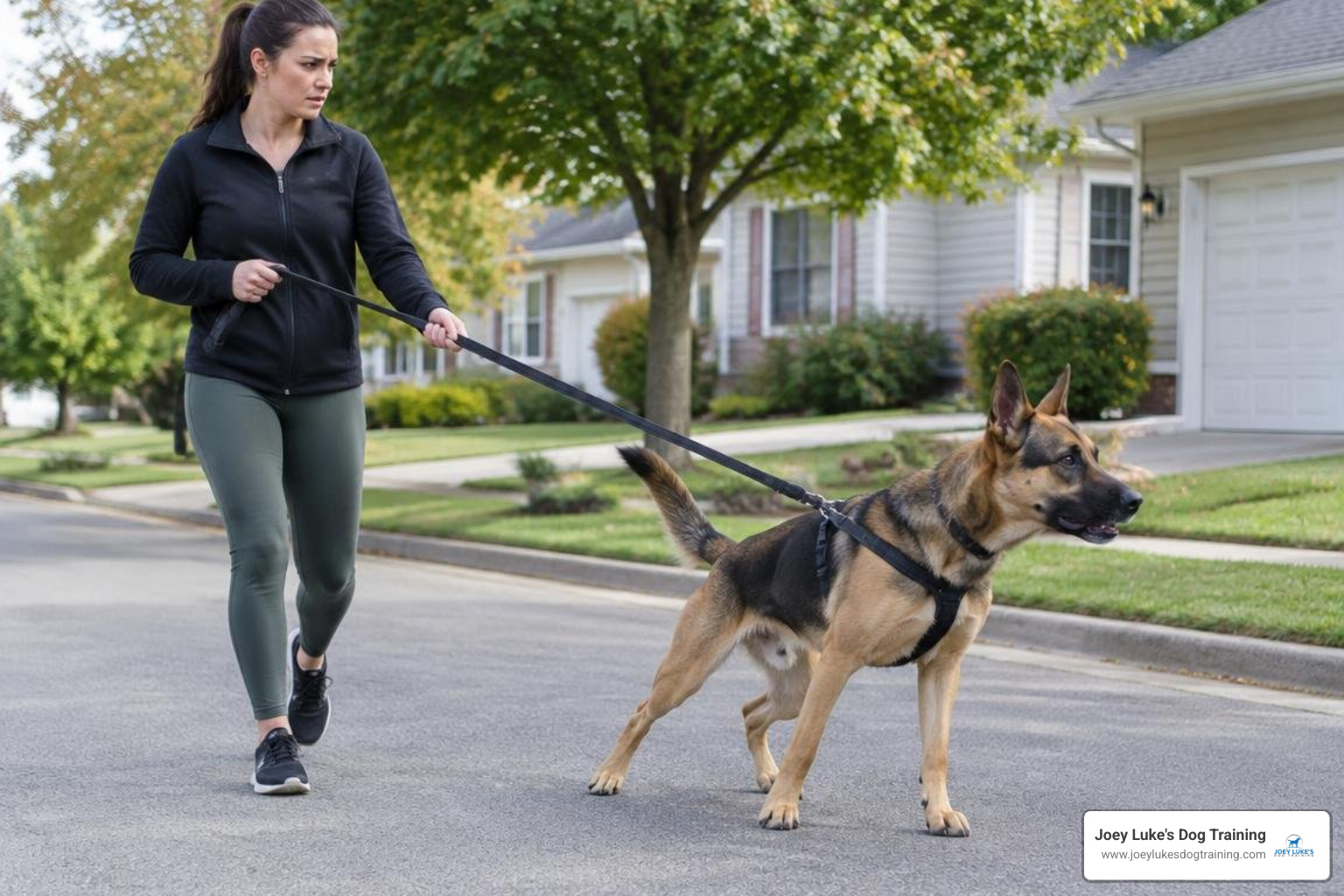
If you're searching for dog aggression training near me in Livonia or the surrounding Detroit suburbs, start with a trainer who'll assess your dog's triggers and bite history, make a safety plan, and show you what to practice at home. For now, give your dog space from situations that lead to growling, lunging, or snapping. If the behavior is new, ask your vet to check for pain.
I'm Joey Johncox, and I've spent more than a decade training dogs, starting in rescue and helping hundreds of families with difficult behavior. I know a search for dog aggression training near me can begin after a scary moment, so let's start by understanding what's driving the behavior.
Why Finding Dog Aggression Training Near Me Starts With Understanding the Root Cause
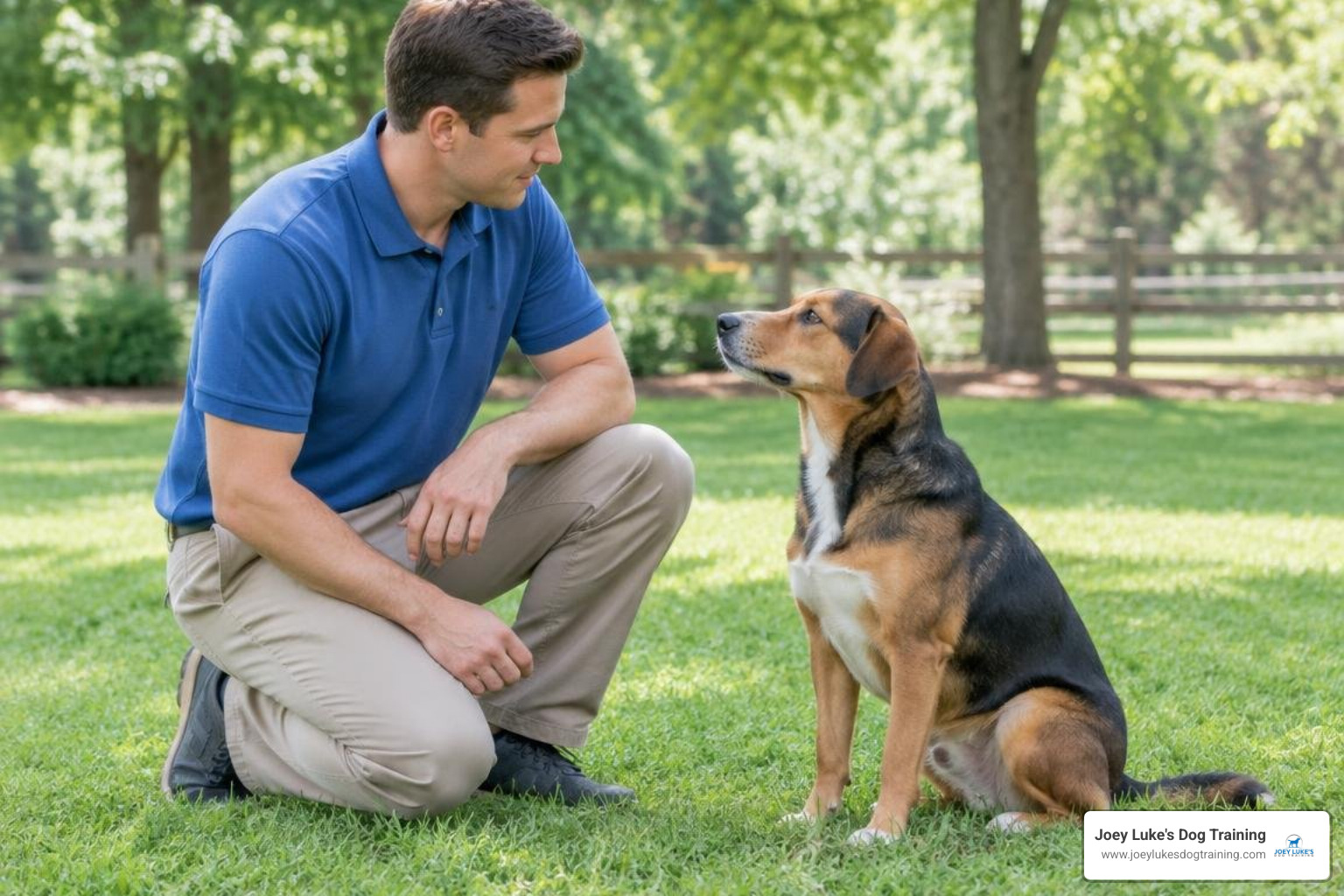
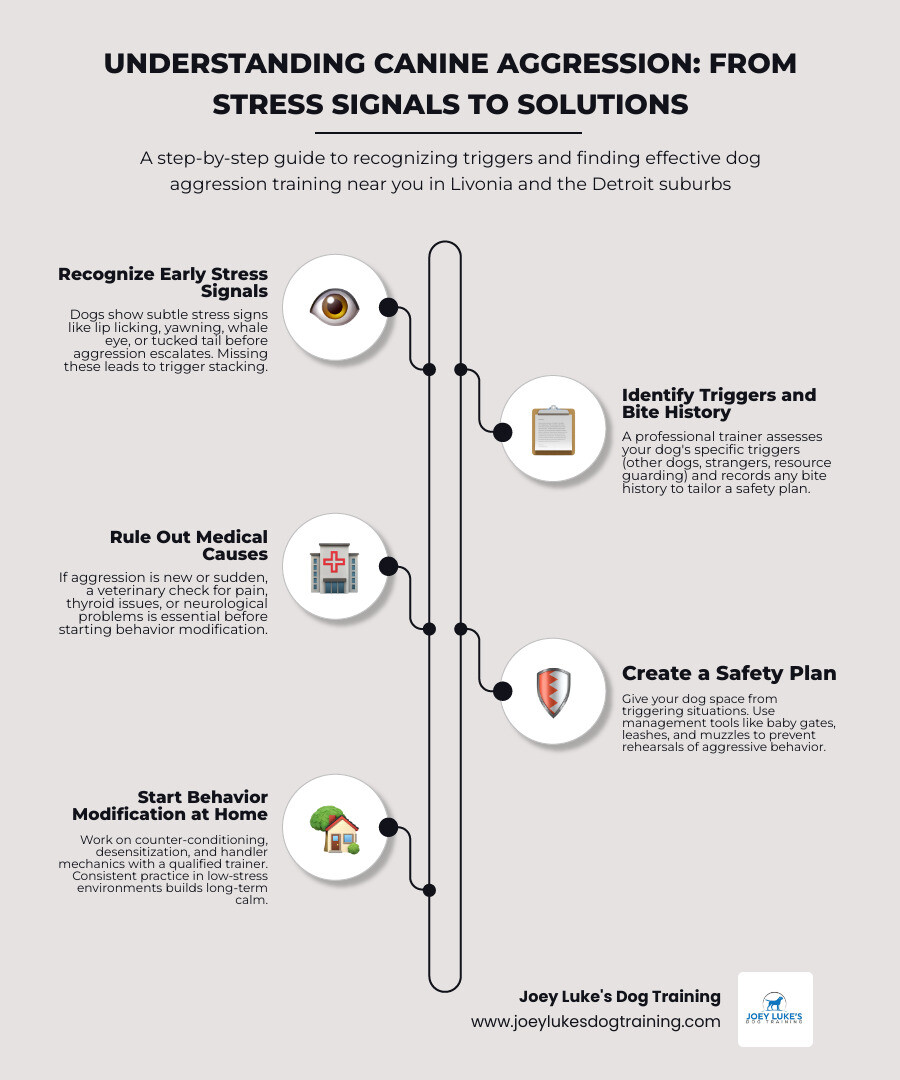
When a dog suddenly barks, snaps, or lunges, it feels like the blowup came out of nowhere. In reality, dogs broadcast their stress long before they make a sound. Missing those subtle signs leads to trigger stacking, where minor annoyances pile up until the dog finally boils over.
Finding real solutions starts with identifying the root emotional trigger rather than just punishing the explosion. A dog guarding a couch is dealing with a very different mindset than a dog terrified of strangers walking past the front window. When we jump straight to suppressing the growl without fixing the underlying emotion, we remove the dog's early warning system.
Every solid behavioral plan begins with a thorough evaluation to map out specific triggers and rule out physical discomfort. If you're struggling with intense reactions at home, getting dedicated pet training for aggressive dogs creates a clear baseline for safe, structured progress.
When Is Obedience Training Not Enough for Aggression?
Teaching a dog to sit or lie down on command is wonderful, but obedience mechanics alone won't cure true aggression. A dog can have a flawless competition style heel in an empty living room and still lose its mind when a delivery driver steps onto the porch.
Aggression requires behavior modification, which directly changes how the dog feels about a trigger through counterconditioning and desensitization. We have to address the internal panic, possessiveness, or frustration before we can expect obedience cues to hold up under heavy distraction.
Could Fear, Pain, or Genetics Be Behind Snapping and Lunging?
Most aggression stems from fear and self defense rather than an evil plot to take over your living room. A dog that feels cornered will use offensive displays to create distance, quickly learning that lunging makes scary things go away.
Hidden physical pain is another massive driver of sudden behavioral changes. Conditions like hip dysplasia, dental disease, or arthritis can make an otherwise sweet family pet snap when touched or crowded.
Genetics and breed instincts also shape how dogs process stress, arousal, and predatory drift. You can explore our reactive dog training ultimate guide to see how fear, drive, and biology intersect during real world walks.
Can a Dog With a Bite History Actually Be Rehabilitated?

Yes, dogs with a bite history can make meaningful turnarounds, but safety protocols must come first. A bite history means the dog has crossed a major threshold and learned that teeth solve its immediate problem.
Rehabilitation starts by putting immediate containment rules in place, such as basket muzzle conditioning, crate routines, and physical barriers around visitors. These steps prevent rehearsals of dangerous behaviors while keeping your household completely safe.
Working with an experienced professional allows you to build safe exposure setups without putting anyone at risk. Organizations like the American Veterinary Society of Animal Behavior emphasize structured handling plans, and reviewing their Position Statement on Humane Dog Training shows why careful planning matters.
How Do You Choose Dog Aggression Training Near Me That Helps Prevent Bites?
Preventing bites requires evaluating the dog's bite inhibition and bite level history. A dog that leaves minor bruising during a high stress handling moment has much better bite inhibition than a dog that bites deeply without warning.
We design step by step desensitization setups that teach the dog new coping mechanisms while keeping them below their panic threshold. Clear communication tools, including balanced tools like electronic collars when properly introduced, give owners dependable control during challenging moments.
What Does Progress Really Look Like: Fixed or Managed Behavior?
People often ask if an aggressive dog can be completely cured. The reality is that true rehabilitation is a blend of neural rewiring and lifelong lifestyle management.
Our comprehensive aggressive dog training focuses on shrinking the dog's triggers while giving owners the daily habits needed to keep stress low. You might always need to manage doorway greetings or monitor high value bones, but your daily life will feel calm, predictable, and safe again.
Would In Home Lessons or Board and Train Work Better for Your Reactive Dog?
Choosing between in home private lessons and an immersive board and train program comes down to your schedule, your dog's severity, and your personal training bandwidth. Both options have distinct advantages for busy households in Plymouth, Novi, and Canton.
Private lessons take place right where the behavior happens, allowing us to coach you through doorway chaos, fence running, and neighborhood leash walks. It requires dedicated daily homework from the family, making it ideal for hands on owners who want step by step guidance fitted around busy sports practices and school schedules.
Board and train programs remove the initial training burden from your shoulders. We handle the heavy lifting of daily repetitions, impulse control, and emotional resets in a controlled environment before transferring those polished skills back to you. When you're planning summer travel, using your boarding budget toward an intensive board and train program turns routine pet care into a massive behavioral breakthrough.
| Training Format | Best Suited For | Daily Time Commitment from Owner | Primary Advantage |
|---|---|---|---|
| In Home Private Lessons | Busy family schedules, location specific triggers, hands on owners | 30 to 45 minutes of daily practice | Real time coaching inside your actual home environment |
| Board and Train Programs | Severe reactivity, bite histories, upcoming vacation travel | Handled by trainer, followed by owner transfer lessons | Rapid habit building through daily immersive professional reps |
What Should You Look for in Board and Train Dog Aggression Training Near Me?
If you choose an immersive program, make sure the trainer has extensive experience with serious behavioral rehabilitation rather than just basic puppy manners. The facility must have clear safety protocols, secure containment, and structured daily routines that prevent stress stacking.
Ask how the trainer introduces tools, builds impulse control, and transfers skills back to you. Before deciding, read our guide on sending your reactive dog away to be fixed to make sure an away program matches your household goals.
Why Can Dog Daycare Make Aggression Worse?
Dog daycare is often marketed as a great way to burn off energy, but for reactive or aggressive dogs, unstructured daycare is fuel on a fire. Dozens of dogs packed into an open room creates constant overstimulation, elevated adrenaline, and rude social interactions.
Dogs that feel insecure quickly learn to strike first to defend their personal space, turning mild anxiety into rehearsed aggression. If you need safe care while working or traveling, check out our advice on boarding an aggressive dog safely instead of relying on chaotic daycare yards.
What Does Behavior Modification Cost, and How Long Can It Take?
Fixing serious behavioral problems is an investment in your family's safety and your peace of mind. Behavior modification requires customized plans, detailed handler coaching, and ongoing support.
Private lesson packages for reactivity generally range from several hundred to a few thousand dollars depending on the number of sessions needed. Immersive board and train programs usually run between $2,000 and $4,000 depending on program length and behavioral severity. Local families looking for practical advice can find great insights in our reactive dog training tips for local families.
How Long Can Rehabilitation Take, from Weeks to Months?
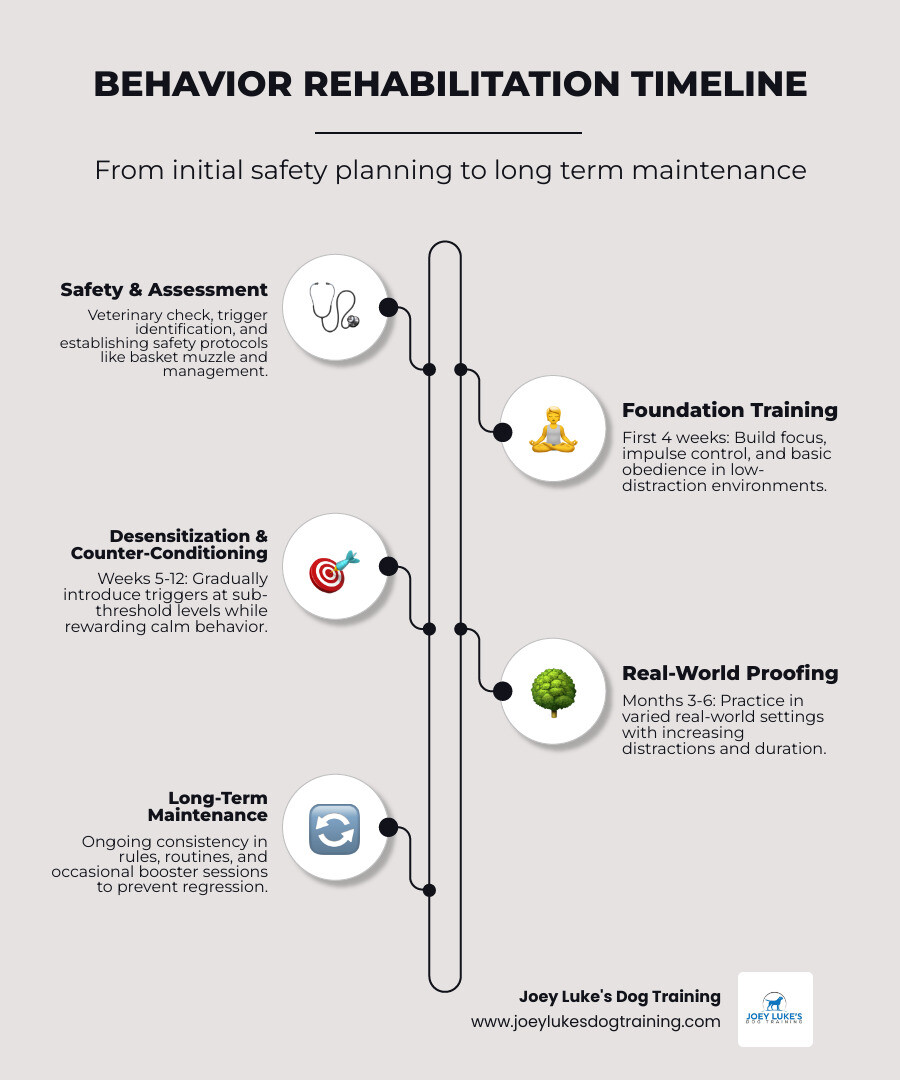
Behavior modification is a marathon rather than an overnight trick. You can expect significant improvements in focus and impulse control within the first four weeks of consistent, structured training.
Deep seated habits and fear responses generally take three to six months of steady real world practice to fully stabilize. Consistency is the secret sauce; dogs thrive when house rules, leash mechanics, and structured routines remain steady every single day.
How Can You Spot Dangerous Red Flags and Fake Guarantees?
Avoid any trainer who offers a 100 percent lifetime guarantee to cure your dog's aggression. Behavior depends on genetics, environment, medical health, and owner follow through, so ethical trainers will never make unrealistic promises.
Steer clear of trainers who refuse to explain their methods or who rely purely on harsh intimidation without teaching alternative behaviors. You also want to avoid trainers who keep you completely out of the process, because if you don't learn how to handle your dog, the old behaviors will return the moment you pick up the leash.
What Do Families Often Ask About Aggressive Dog Rehabilitation?
Dealing with an aggressive dog brings up a lot of urgent questions, especially when kids, neighbors, and busy schedules are involved. Here are straight answers to the questions we hear most often from local pet owners.
How Much Does Professional Aggression Training Typically Cost?
Initial behavioral evaluations generally cost between $100 and $300 to assess triggers, review bite history, and outline a tailored roadmap. Comprehensive private lesson programs usually run from $800 to $1,800, while multi week board and train rehabilitation programs typically range from $2,500 to $4,000.
Can Older Dogs Learn to Stop Resource Guarding?
Older dogs can absolutely learn to stop guarding food bowls, couches, and toys. While their habits are older, senior dogs adapt quickly once you remove confrontational pressure and replace it with structured trade games and clear boundaries.
What Should You Do Immediately After Your Dog Snaps or Bites?
First, calmly separate your dog and secure them in a crate or separate room without yelling or physical punishment. Check anyone involved for injuries and seek medical attention if the skin was broken.
Once everyone is safe, write down exactly what happened leading up to the bite, including who was present, what items were nearby, and what body language occurred. Schedule a veterinary exam to check for pain, and reach out to a professional behavior specialist before exposing the dog to that trigger again.
Ready to Reclaim Peace at Home With a Training Plan That Fits Your Family?
Living with a reactive or aggressive dog is exhausting, embarrassing, and overwhelming, but you don't have to figure it out alone. At Joey Luke's Dog Training, we specialize in helping families across Livonia, Northville, Plymouth, and the surrounding Detroit suburbs turn stressful pets into dependable family companions.
Whether you need private lessons that fit into your busy weekly schedule or a board and train program that jumpstarts your progress, we use a balanced training approach tailored to your home. Explore our comprehensive dog training services to schedule your evaluation and bring calm back to your living room.
