
How to Manage Reactivity with These 4 Quick Changes
Why Your Dog Explodes Before You Even See the Trigger
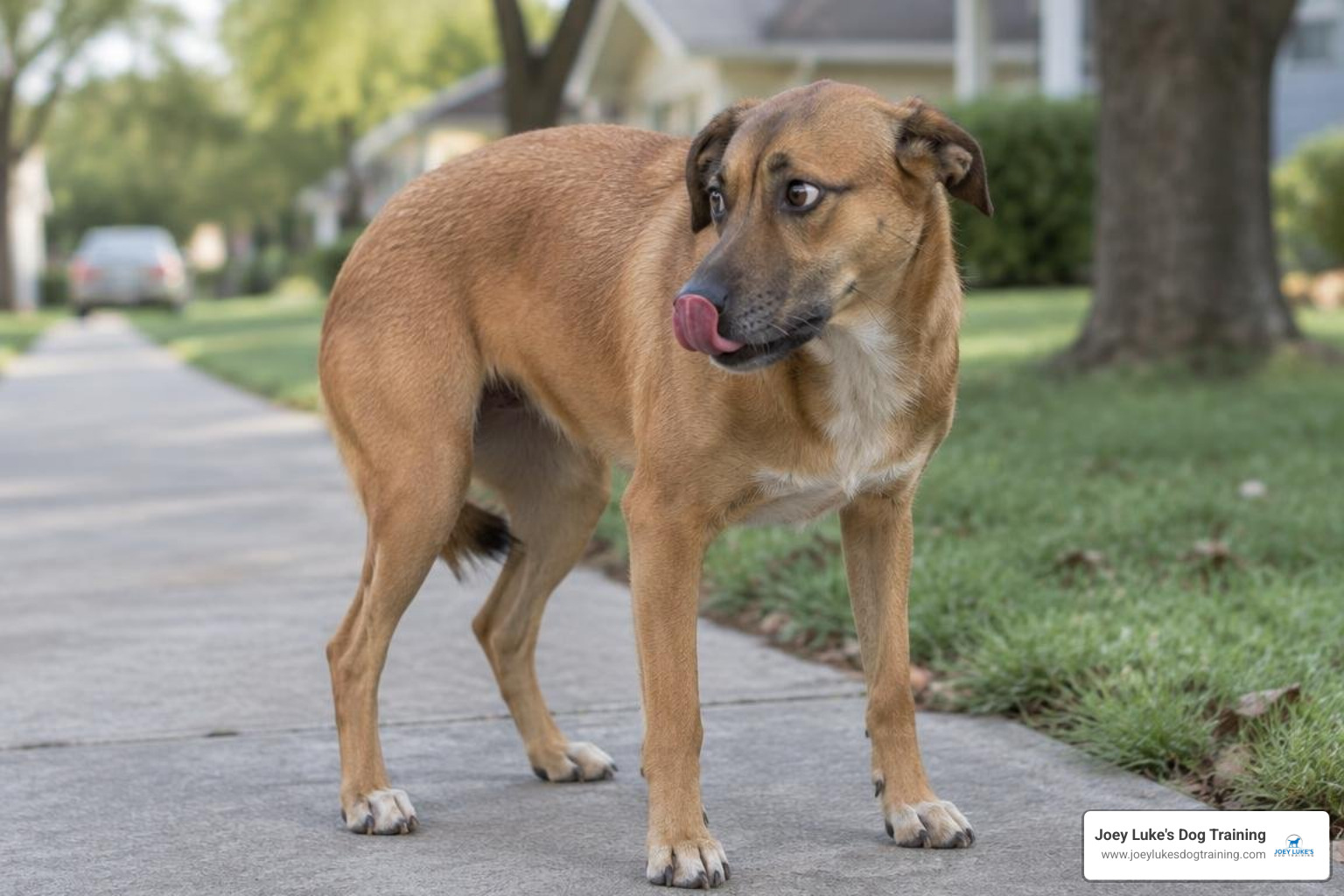
Managing leash reactivity comes down to three immediate steps: create distance from triggers, reward your pup before they react, and maintain a structured heel. Successful dog training for reactive dogs focuses on keeping your dog below their stress limit so their brain can actually process information. When you spot another dog, cross the street, deliver high value food the moment your pup notices, and use clear leash guidance to walk past smoothly.
Living with a reactive dog can turn a simple stroll through Livonia, Plymouth, or Northville into an intense tactical mission. Reactivity is an emotional explosion, not your dog being spiteful. When your dog catches sight of an approaching trigger, their brain hits the alarm button long before you hear that first loud bark. This instant surge is a conditioned emotional response that flips on the sympathetic nervous system and triggers pure survival instinct. According to the American Kennel Club, reactivity is often rooted in fear or frustration rather than a desire to cause harm.
How to Spot the Small Stress Signals Before the Barking Starts
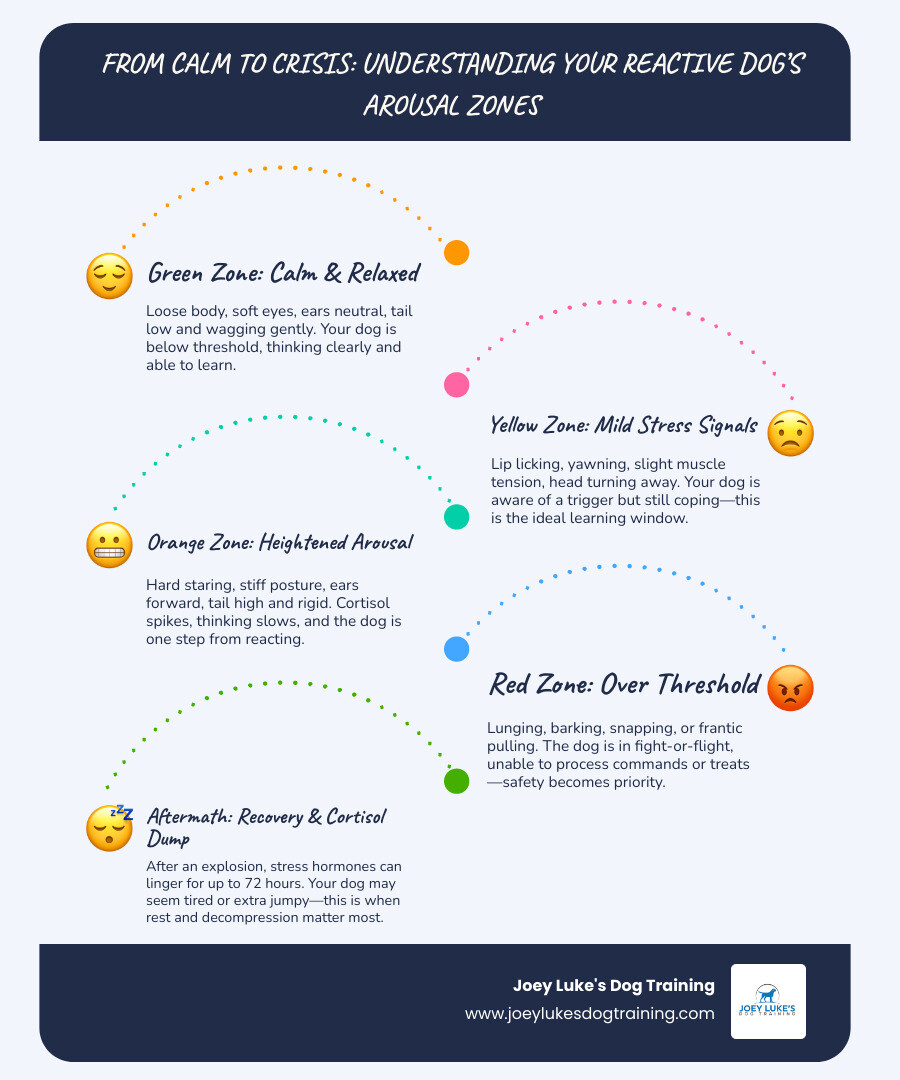
Dogs rarely go from totally relaxed to a full meltdown without warning. They whisper their discomfort long before they scream it at the end of the leash. Catching these tiny clues gives you precious seconds to step in and redirect the situation.
Watch for subtle body language cues like quick lip licks, sudden stillness, or a tight jaw. Your dog might offer a displacement yawn, show the whites of their eyes in a wide whale eye look, or lock into a rigid staring contest. When you spot those stiff ears or a suddenly frozen posture, your pup is telling you the pressure is mounting.
Why Training Works Best When Your Dog Is Below Threshold
Every dog has an invisible safety bubble called their threshold distance. Outside that boundary, in the subthreshold zone, your dog sees the trigger without panicking. Their thinking brain stays online, allowing them to process food, listen to your cues, and make better choices.
The moment a trigger breaches that bubble, autonomic arousal spikes and cognitive capacity evaporates. That's why counterconditioning and desensitization for dog anxiety, reactivity, and aggression focuses heavily on keeping dogs in that calm working space. Pushing a dog past their limit just rehearses the exact panic you want to eliminate.
Four Quick Changes That Can Make Walks Feel More Manageable
Fixing reactivity doesn't require magic or endless frustration, but it does require changing your handling habits. Small tactical adjustments turn stressful walks around quickly.
| Handling Situation | Reactive Management Mistake | Proactive Handler Strategy |
|---|---|---|
| Approaching Trigger | Tightening the leash and marching straight forward | Creating lateral space and crossing the street |
| Food Delivery | Shoving treats in mouth after barking begins | Rewarding the exact second the dog spots the trigger |
| Multiple Stressors | Forcing long walks every single day | Giving decompression days after high stress events |
| Sidewalk Navigation | Letting the dog pull ahead without direction | Guiding the dog in a structured heel position |
Shifting from panicked reactions to proactive leadership changes how your dog perceives every neighborhood stroll.
Change 1: Give Your Dog More Room to Feel Safe
Distance is your greatest ally when handling reactivity. When you give your dog sufficient physical room, you preserve their flight distance, which keeps their brain out of survival mode. If you see another dog walking toward you down a sidewalk in Farmington Hills or Canton, don't try to squeeze past on a narrow strip of grass.
Cross the street, step up a wide driveway, or duck behind a parked car to break your dog's line of sight. Using simple visual barriers buys you time and lowers environmental pressure. You're protecting your dog's peace while showing them that you'll keep them safe.
Change 2: Get the Timing Right When You Reward Your Dog
Many owners reach for treats only after their dog has already started growling or lunging. Rewarding during a meltdown is useless because your dog is too stressed to form new associations. You must nail the exact sequence: trigger appears, dog notices, marker word sounds, high value food arrives.
The trigger must always predict the delicious food, never the other way around. High value reinforcers like roasted chicken, string cheese, or beef liver create a genuine shift in emotional perspective. Over time, spotting another dog stops feeling like an impending threat and starts feeling like an opportunity for something fantastic.
Change 3: Give Your Dog Time to Recover Between Triggers
Stress doesn't vanish the second a strange dog walks out of view. Cortisol and adrenaline linger in canine bloodstreams for days, creating a phenomenon known as trigger stacking. If your dog gets startled by the garbage truck, barks at the mail delivery driver, and then encounters an off leash dog, their emotional bucket overflows.
After a tough encounter, take a couple of recovery days to let their nervous system reset. Replace neighborhood sidewalk walks with backyard sniffing games, puzzle toys, and quiet sensory decompression time. Giving your dog breathing room prevents cumulative stress from ruining weeks of solid training progress.
Change 4: Use Clear Leash Guidance and Practice a Structured Heel
A wandering dog scanning the horizon is constantly looking for things to react to. Teaching a dependable heel gives your dog a clear, comforting job to focus on while you navigate busy areas. Clear directional guidance removes the guesswork, which dramatically reduces their overall anxiety.
Balanced training gives owners dependable communication tools to guide dogs through high distraction environments. Leash pressure, combined with electronic collar communication when properly taught, provides clear, fair boundaries. Following controlled socialization steps helps dogs learn how to pass distractions without feeling the need to explode.
What Reactive Dog Walks Look Like in Real Life
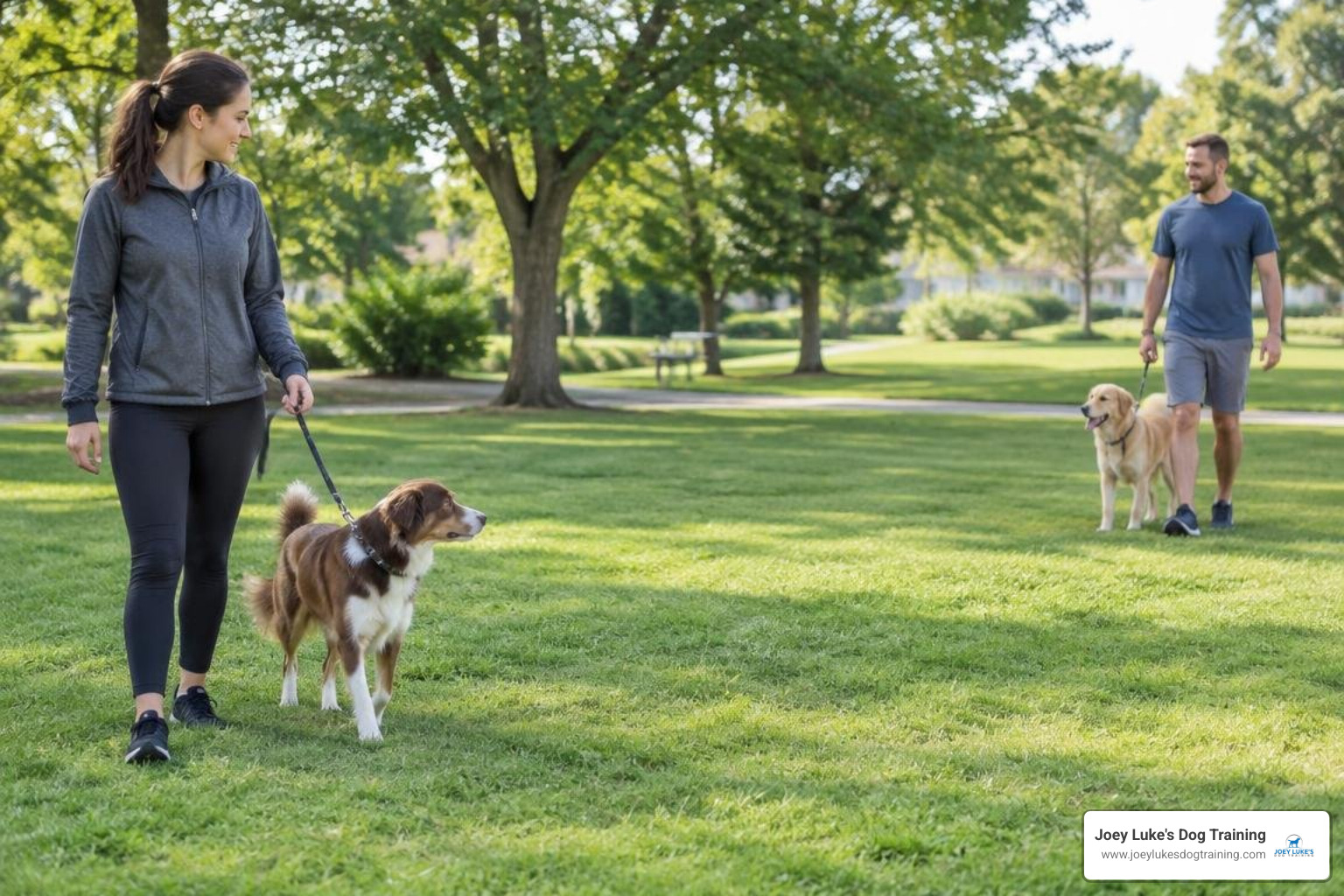
Neighborhood walks are messy, unpredictable, and full of surprises. Real life throws sudden delivery vans, rogue squirrels, and barking yard dogs right in your path. Success isn't about living in a bubble; it's about having a solid plan when everyday chaos appears.
Practicing controlled setups in quiet business parks or empty school parking lots across Novi and Birmingham builds real world reliability. When you systematically expose your pup to distant distractions, you build the confidence needed for crowded suburban sidewalks.
What to Do When Another Dog Appears on a Narrow Sidewalk
When you round a corner and find yourself face to face with another dog, ditch the panic and execute an emergency U turn. Pivot smoothly, use your voice to encourage your pup, and move away briskly to reestablish your safety zone. You never need to stay in a bad situation just to prove a point.
If you have plenty of room across a wide park field, parallel walking is an incredible tool. Walking in the same direction as another dog at a comfortable distance teaches neutral tolerance without the confrontational pressure of head on eye contact. If your dog struggles with intense leash reactivity, our focused pet training for aggressive dogs provides the structured support families need.
What Helps When Your Dog Barks at Strangers or Guests
Reactivity often spills into the home when visitors knock on the door. Ringing doorbells and entering guests trigger territorial defensiveness and high arousal in insecure dogs. Chaos ensues when dogs rush the front entryway without any clear boundaries in place.
Teaching a rock solid place command provides a clear alternative behavior. Sending your pup to a designated bed or cot keeps them away from the front door and creates a calming physical boundary. For severe territorial reactions or intense stranger wariness, our specialized aggressive dog training helps families restore safety and peace to their living rooms.
Questions Dog Owners Often Ask About Reactivity
Rehabilitating a reactive dog brings up a ton of valid questions for owners trying to navigate family life. Here's what you need to know about the journey.
Can an Older Reactive Dog Learn to Feel More Neutral?
Adult and senior dogs can absolutely learn new emotional patterns thanks to neuroplasticity. An older dog might have years of practiced barking habits, but consistent structure and clear communication break those old routines.
The goal isn't necessarily turning your dog into a social butterfly who loves every strange canine. Building calm neutrality where your dog can comfortably ignore passersby is a fantastic, realistic outcome that brings peace to your daily walks.
Why Might Your Dog React After Weeks of Progress?
Behavioral regression happens to almost everyone, and it doesn't mean your training has failed. Often, hidden trigger stacking is the culprit, where small unseen stressors accumulate and push your pup past their breaking point.
Physical discomfort is another major factor that often gets overlooked. Research indicates that around a third of behavioral referral cases involve underlying pain or medical issues. If your dog suddenly regresses, a quick veterinary checkup ensures hip tightness, ear infections, or joint discomfort aren't driving the sudden crankiness.
When Is It Time to Get Professional Help for Dangerous Reactivity?
If your dog lunges hard enough to pull you over, snaps at family members, or redirects their frustration onto you, don't wait to seek help. Managing genuine aggression safely requires experienced, hands on guidance before someone gets hurt.
Working with an experienced dog behaviorist gives you an honest assessment and a customized roadmap for your home. If your summer travel schedule is approaching, pairing your boarding budget with behavioral rehabilitation through our board and train programs can be a smart way to get intensive results while you're away.
Helping Your Reactive Dog Become a Calm Family Companion
Living with a reactive dog feels isolating, but you don't have to navigate the stress on your own. At Joey Luke's Dog Training, we specialize in helping families across Livonia, Redford, Dearborn, and the surrounding areas turn stressful walks into calm, enjoyable outings. We understand the daily juggle of children, busy household schedules, and challenging canine behavior.
Whether you need the flexibility of private lessons tailored around your family's routine or an intensive board and train program to jumpstart results, our balanced approach builds lasting clarity. Explore our comprehensive dog training programs to discover how we can help your dog become the dependable, relaxed companion your family deserves.
