
Is Puppy Residential Training Right for Your Family?

Puppy residential training means your puppy stays with a trainer for daily practice, then comes home with a plan you can follow. It can be a good fit if school runs, work, and family life make a steady training routine hard to keep. Look for a program that explains how it handles potty habits, biting, and crate comfort, keeps puppies safe, and teaches you the skills before pickup. A stay can build a strong start, but it can't replace practice at home.
I'm Joey Johncox. I've spent more than a decade helping dogs and families through rescue work and training, and I know puppy residential training works best when the whole family can carry those new habits forward. The American Kennel Club notes that puppy training works best when it starts early and stays consistent, which is exactly what a structured residential stay provides.
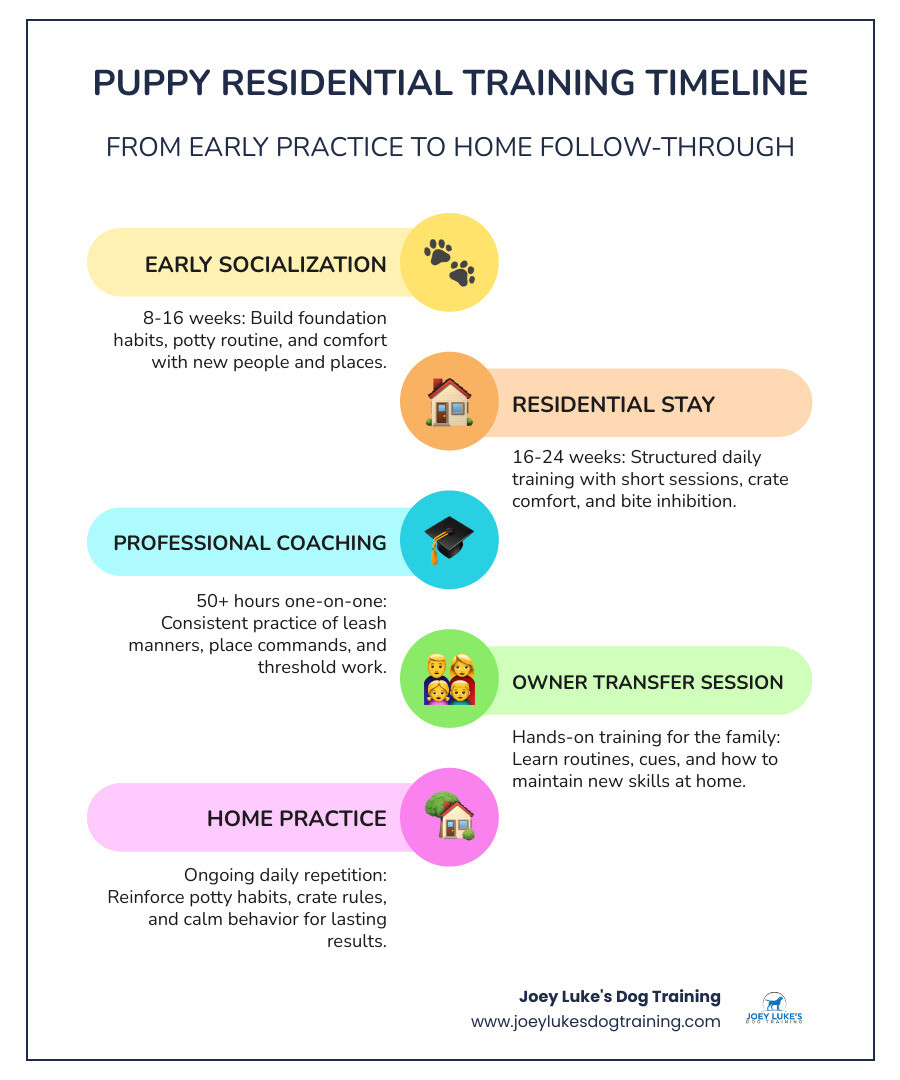
What a Puppy’s Day at Residential Training Really Looks Like
When you drop your young dog off for an extended stay, they aren't sitting behind bars waiting around for an occasional head scratch. Our dedicated puppy training programs run on a structured daily schedule designed specifically around how young canine brains work. Puppies tire out fast, so we break their education into short, upbeat learning blocks spaced throughout the day.
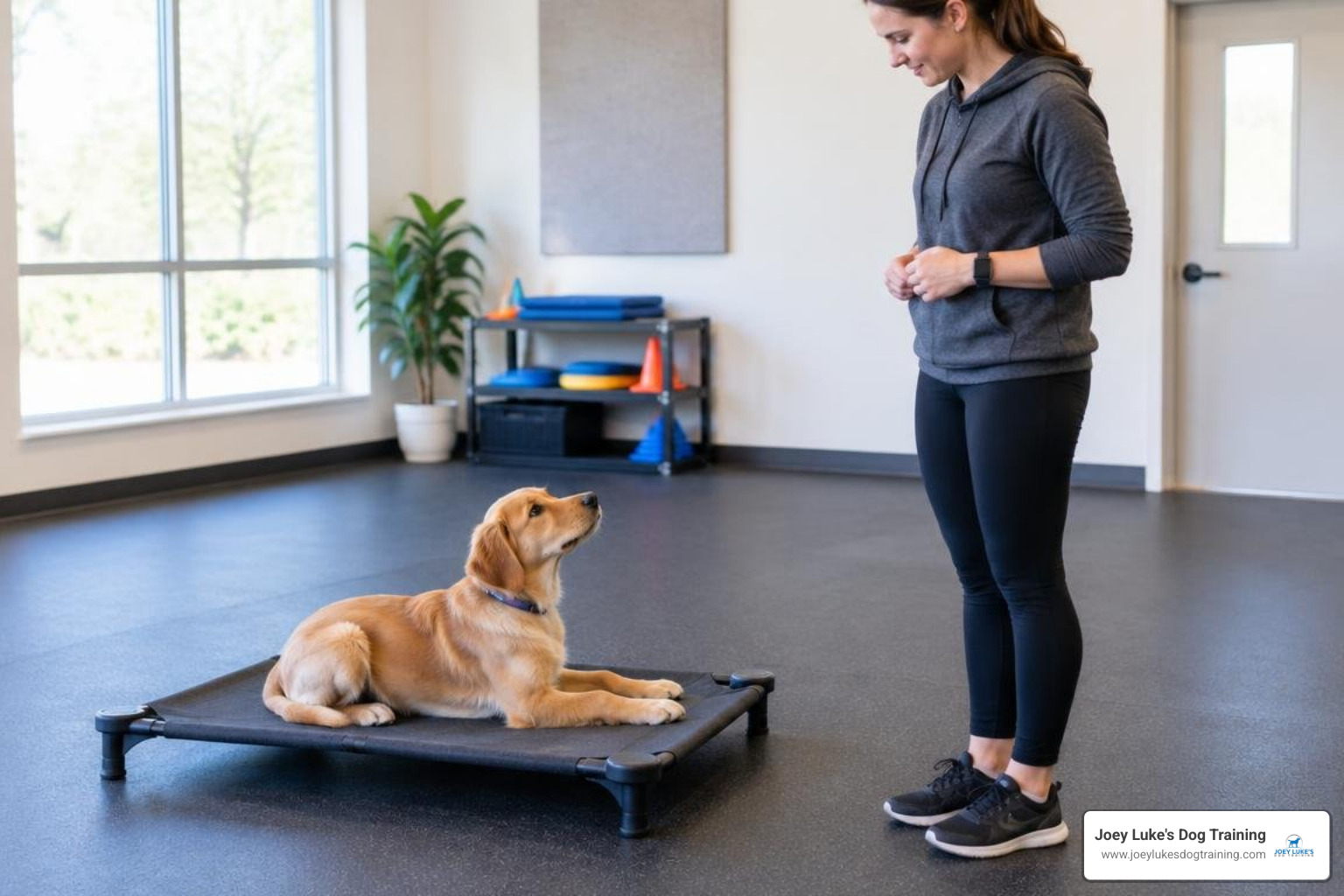
Training sessions should never drag on because puppies lose focus quickly. Research shows most dogs learn best in ten to fifteen minute increments, never exceeding twenty minutes at a time. Across an intensive three week stay featuring eighteen nights of boarding, your pup receives around fifty hours of one on one coaching focused on core obedience and real world stability.
Between those focused training sessions, your pup gets structured bathroom breaks, supervised enrichment games, and essential downtime. We take them out frequently to lock in clean potty habits while keeping their minds active and happy. It's a rhythm built on consistency, patience, and clear communication.
How Residential Training Helps With Potty Accidents, Biting, and Crate Worries
Puppies arrive with zero understanding of human rules, which is why your favorite pair of sneakers usually ends up shredded. Needle sharp puppy teeth and random indoor puddles can quickly push a busy household to its breaking point. We jump into the trenches right away to build solid house manners from the ground up.
Crate comfort comes first because an overtired puppy is a destructive puppy. We teach them that the crate is a safe, peaceful den for enforced daytime naps, which prevents overtired tantrums and nip attacks. By managing potty breaks down to the minute and rewarding outside trips instantly, we reset their biological clock for dependable bathroom habits.
Bite inhibition gets addressed through clear cause and effect. We pair food rewards, praise, and toy redirection with gentle feedback so pups understand human skin isn't a chew toy. Working through these foundation skills at controlled threshold distances stops bad habits before they harden into adult behavior problems.
When Is the Right Age to Start Puppy Residential Training?
Timing matters when you're mapping out your young dog's early education. Puppies between sixteen and twenty four weeks old hit the ideal sweet spot for an intensive learning residency. At this stage, their immune systems are better protected by core vaccines, and their brains are ready to absorb complex routines.
During this sixteen to twenty four week window, pups navigate critical developmental milestones and secondary fear periods. We protect their joints by avoiding repetitive strain on tall stairs, teaching careful footwork instead. Reviewing early canine sleepaway camp guidelines can help you decide if your dog is physically and mentally ready for immersive learning.
Early socialization isn't about letting your dog greet every stranger on the sidewalk. It's about teaching your pup to remain neutral, relaxed, and focused on you around novel sights, strange sounds, and moving traffic. Nailing that neutrality early saves you years of stressful sidewalk pulling.
Why Busy Michigan Parents Often Prefer Daily Training
Between soccer practices in Livonia, grocery runs through Plymouth, and rush hour traffic on I ninety six, finding two hours every night to drill leash walking feels impossible. When parents handle all the training reps themselves, life inevitably gets in the way. Professional residential programs bridge that gap by providing hundreds of daily repetitions with zero distractions from household chores.
Professional consistency cuts the learning curve dramatically. While a family might accidentally reinforce jumping at the front door because the kids are excited, a trainer catches every single micro behavior in real time. We build bulletproof reliability in quiet rooms first, then gradually proof those same behaviors around real world neighborhood distractions.
If your calendar is constantly packed, choosing our comprehensive reputable Michigan board and train options allows you to turn your regular family vacation into a major behavioral upgrade for your dog. Instead of paying a pet sitter just to watch your pup practice bad habits, you invest that boarding budget into lifelong obedience results. For families who prefer hands on weekly guidance around soccer practice, private lessons provide a flexible alternative that fits right into hectic school schedules.
| Training Format | Daily Time Commitment for Owners | Speed of Habit Formation | Best Suited Family Situation |
|---|---|---|---|
| Residential Board and Train | Zero daily training during the stay; practice at transfer | Rapid transformation via 50+ hours of pro coaching | Busy families with kids, heavy work schedules, or upcoming vacations |
| Weekly Private Lessons | 30 to 45 minutes of daily home practice required | Steady, progressive growth over several weeks | Hands on owners who want step by step coaching at home |
What Goes Into the Cost of Puppy Residential Training
Investing in an immersive learning program is a significant financial decision for any household. A complete three week residential program typically costs $4,500 all inclusive, covering eighteen nights of dedicated care alongside fifty hours of professional one on one instruction. When you calculate those same services separately at standard hourly rates, individual lessons and specialty boarding can run as high as $9,750.
Bundled programs protect your wallet by locking in comprehensive care regardless of your pup's size or breed quirks. Understanding the cost factors of board and train helps you compare what you're actually receiving versus cheap facilities that cut corners on safety and trainer experience. You're investing in intensive behavioral groundwork that pays dividends for the next fifteen years.

Think of it as frontloading your dog expenses so you avoid costly emergency fixes down the road. Fixing an out of control two year old dog with severe reactivity requires months of expensive behavioral rehabilitation. Paying for top tier puppy training today saves your drywall, your shoes, and your sanity for years to come.
How We Help Puppies Feel Safe and Settled Away From Home
Sending your young dog away for several weeks can feel a little nerve wracking if you've never done it before. We treat every guest like our own family companion, creating a calm, sanitized environment where young dogs thrive without sensory overload. Routine health checks, clean resting spaces, and careful stress management keep your pup healthy and happy.
We use a clear, balanced training approach that meets each puppy where they are developmentally. We build initial skills using positive rewards like high value treats, fun toys, and enthusiastic praise, showing your dog exactly what we want them to do. Once a dog thoroughly understands a command, we introduce gentle guidance and fair boundaries, utilizing tools such as electronic collars when appropriate for dependable off leash freedom.
Keeping pet parents informed is just as vital as working with the dog. We send regular progress updates so you can watch your pup's manners improve week by week. Our practical guide to safe puppy boarding walks through everything you should expect from a high caliber training facility.
How We Help the Training Carry Over at Home
The best training program in the world won't stick if your pup comes home to total chaos. That's why the final hands on transfer session is the most important part of our entire process. We don't just hand you a leash and wave goodbye; we coach you and your kids through every single command until everyone feels completely confident.
During your transfer session, we teach you how to handle mealtime manners, doorway etiquette, and calm crate routines in your own living space. Reviewing long term board and train success strategies helps your household maintain clear rules from day one. When the humans use consistent language, the dog never has to guess what's expected of them.
Kids love being involved with the family dog, so we teach them clear, simple handling cues that prevent accidental roughhousing. We show your children how to walk the pup politely without turning the leash into a game of tug of war. When the whole family works as a united team, those newly learned manners stay sharp for life.
What Livonia Families Want to Know About Puppy Board and Train
Will My Puppy Forget Me During Residential Training?
Your puppy won't forget who you are during their stay. Dogs have incredible scent memory and strong emotional bonds with their primary families, so reunion day always brings huge tail wags and happy greetings. The only difference you'll notice is that they greet you with all four paws resting politely on the floor instead of launching into your chest.
What If My Puppy Gets Overwhelmed or Makes a Mistake?
Mistakes are a completely normal part of the learning process for any young dog. If a pup gets tired or confused during a session, we immediately lower the criteria, reset their threshold, and reward a simple, successful movement. Keeping our practice sessions short prevents frustration and ensures your puppy always finishes their work feeling proud and enthusiastic.
How Can I Maintain Good Leash and Crate Manners at Home?
Consistency at home doesn't mean running formal obedience drills for hours every day. It simply means sticking to the daily crate routines, doorway boundaries, and loose leash walking habits we teach you during your pickup appointment. If you ever run into a hiccup with a specific command, we're always just a phone call away to help you get right back on track.
How Livonia Families Can Raise a Confident, Well Mannered Family Dog
Living with a puppy shouldn't feel like a never ending wrestling match against razor sharp teeth and pulled leashes. When you pair professional daily training with consistent home routines, you turn a chaotic young pup into an easygoing companion you can take anywhere. Whether you're strolling through downtown Northville or hanging out in your Livonia backyard, life with your dog should be fun and stress free.
At Joey Luke's Dog Training, we specialize in helping local families transform stressful pets into reliable household companions. If you're ready to skip the puppy raising burnout and enjoy a polite, confident dog, check out our trusted Livonia puppy training programs to get your family started on the right path today.
