
An Essential Guide to Safe Boarding Options for Your Puppy
When Is It Safe to Leave Your Young Dog for the First Time?
Leaving your puppy overnight is a major milestone, but their immune system and emotional maturity must be ready before you make that reservation. Young puppies are still developing their natural defenses against contagious illnesses, and their early behavioral experiences leave permanent impressions on their temperament.
Here is how safety, immune readiness, and development align across different puppy age brackets:
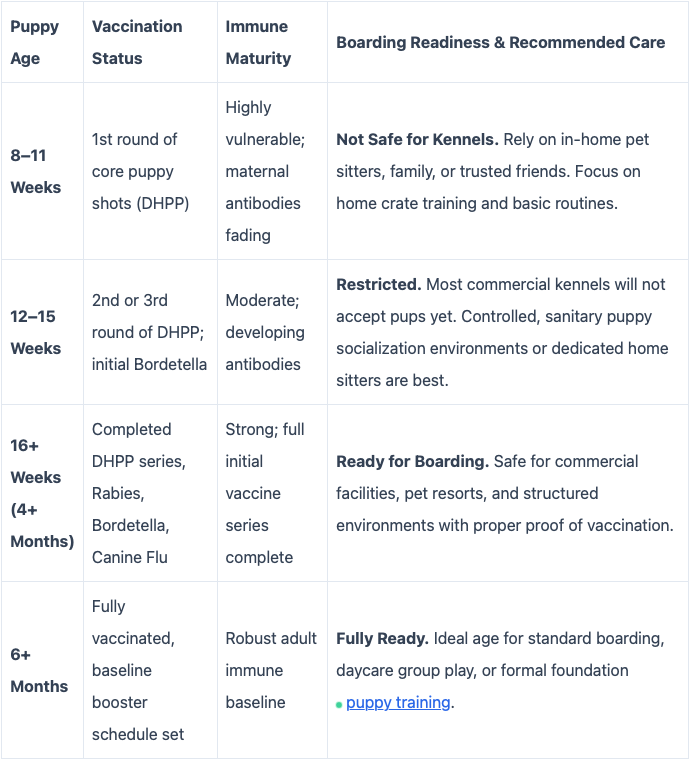
Before booking any overnight stay, ensure you aren't rushing past your veterinarian's recommended schedule.
Minimum Age and Vaccine Milestones to Board a Puppy
The industry standard for boarding a young dog centers on the sixteen-week milestone. By 16 weeks of age, most puppies have finished their complete core vaccination series. This series includes the multi-dose DHPP vaccine (protecting against distemper, hepatitis, parainfluenza, and parvovirus), an active Bordetella shot for kennel cough, and their mandatory Rabies vaccination. Many boarding facilities also require a two-dose Canine Influenza series.
Commercial boarding facilities house many dogs under one roof. That shared environment increases the transmission risk for airborne viruses and surface pathogens. While groups like the [American Veterinary Society of Animal Behavior](https://avsab.org) emphasize early exposure during the critical first few months, group boarding kennels require a fully inoculated immune system to prevent life-threatening outbreaks like parvovirus.
Developmental Readiness and Socialization Windows
A puppy's first three months represent a critical socialization window that permanently shapes their adult personality. During this period, their brains form lasting impressions about what is safe and what is threatening. A massive study of over 13,000 Finnish pet dogs revealed that dogs provided with frequent, varied, and positive socialization experiences were significantly less likely to develop fearful and anxious behaviors later in life.
Boarding can actually serve as a resilience builder if your dog is developmentally prepared. However, puppies also go through sensitive fear periods around 8 to 11 weeks and again during adolescence. Dropping an unprepared puppy into a noisy, overwhelming kennel during a fear stage can create negative associations that linger for years. Learning what your puppy is trying to tell you through their subtle body language helps you gauge whether they are confident enough for a new environment or need more time building independence at home.
How to Choose the Right Facility When You Board a Puppy
Choosing where your puppy stays while you are away requires thorough vetting. Not all pet care facilities provide the careful management, sanitation, and individual attention a young pup needs to thrive.
Take the time to tour facilities in person before booking. You want to see how the staff interacts with the dogs, inspect the ventilation, and make sure the environment feels structured rather than chaotic. Finding quality care is very similar to finding a trusted board and train program for your dog; you are looking for transparent staff, clean housing, and clear daily structures.
Key Questions to Ask Before You Board a Puppy
When interviewing potential boarding operators, ask direct questions to understand their daily operations:
- How are playgroups organized? Make sure playgroups are strictly separated by size, age, and play style. An energetic 15-pound puppy shouldn't be roughhousing with unfamiliar 80-pound adult dogs.
- What is the staff-to-dog ratio? Dedicated supervision prevents bullying, overstimulation, and accidental injuries during group play.
- What are your emergency medical protocols? Ask which local veterinary hospital they partner with and what steps they take if a puppy shows sudden signs of lethargy or digestive distress.
- Do you offer live webcams or daily updates? Direct access to live video feeds or scheduled photo updates gives you peace of mind while traveling.
- What is the daily rest schedule? Puppies need 16 to 18 hours of sleep per day. Facilities that enforce mandatory midday rest periods protect young dogs from becoming overtired and cranky.
Green Flags and Red Flags in Overnight Puppy Care
Keep an eye out for these telltale signs of facility quality:
Green Flags:
- Staff members require up-to-date veterinary records and conduct a mandatory behavioral temperament test before confirming overnight stays.
- Kennels and play areas smell clean, use non-porous surfaces, and feature medical-grade stainless steel bowls that resist bacteria buildup.
- Rest areas are quiet and completely separated from loud, high-traffic daycare zones.
- Handlers use calm, balanced communication and structured handling rather than letting dogs run in uncontrolled packs.
Red Flags:
- The facility allows unverified dogs to enter without reviewing vaccine records.
- Strong odors of ammonia or feces linger in the housing corridors.
- Staff members seem vague or dismissive when asked about accident handling, daily routines, or overnight supervision.
- Dogs are kept in constant, all-day group play without designated nap times in private suites.
How to Prepare Your Puppy at Home for Their First Overnight Stay
Preparing your puppy for boarding starts weeks before your departure date. If your pup only sleeps in your bed and spends zero time alone during the day, suddenly waking up in a boarding suite can feel overwhelming.
Begin by establishing independent sleep habits at home. Have your puppy nap in a crate in another room for small stretches during the day. Practice calm separations where you leave the house for brief intervals and return without making a dramatic fuss. Solidifying your routine with the ultimate no stress guide to puppy house training ensures your puppy understands crate rest and predictable potty breaks before entering an unfamiliar facility.
When drop-off day arrives, keep your goodbye cheerful, calm, and brief. Puppies pick up on your emotional state immediately; a drawn-out, emotional departure signals to your pup that something is wrong, whereas an upbeat handover helps them step forward with confidence.
Packing Essentials for a Smooth Boarding Stay
Bringing familiar comforts from home helps ground your puppy in their temporary surroundings:
1. Pre-Portioned Food: Bag each meal individually and label it clearly. Sudden diet changes cause loose stools and stomach upset, especially when combined with the excitement of boarding.
2. Up-to-Date Health Documentation: Bring physical copies of your puppy's vaccination certificates, parasite prevention records, and emergency contact numbers.
3. Clear Written Instructions: Outline your puppy's feeding times, exact potty cue words, medication requirements, and daily schedule.
4. Toy and Comfort Item Safety: Keep blankets, clothing, plush toys, and chew toys at home unless the facility specifically approves them and can supervise their use. That lowers the risk of accidental ingestion, while still allowing staff to provide safe enrichment activities and puppy appropriate toys when the timing and setting make sense.
What to Expect in Your Puppy's Behavior After Boarding
When you bring your puppy home, do not be surprised if their behavior seems slightly different for a few days. The sheer amount of physical exercise, mental stimulation, and new sensory input at a boarding facility takes energy to process.
Most puppies will sleep deeply for the first 24 to 48 hours back home. They might also act extra clingy, shadowing you from room to room, or show minor, temporary lapses in their potty manners. These hiccups are normal responses to mental fatigue rather than permanent behavioral setbacks. Reviewing 3 mistakes families make when raising a puppy and how to avoid them will help you quickly reset your household rules, restore daily structure, and guide your puppy right back into their normal groove.
Why a Structured Board and Train Program Might Be a Better Option
If you are already budgeting for boarding during an upcoming trip or summer vacation, you might want to consider rolling that lodging expense into an immersive training experience. Standard boarding provides safe shelter and play, but a professional board and train program actively builds real-world obedience while you are away.
Instead of spending their days simply waiting in a kennel run, your puppy receives focused daily lessons covering leash manners, impulse control, crate confidence, and reliable responses to basic commands. Understanding the truth about board and trains for dogs helps demystify how structured residential training works. It bridges the gap between basic boarding and reliable home obedience, giving busy families a significant head start on raising an enjoyable family companion.
Frequently Asked Questions About Puppy Boarding
Can you board an eight-week-old puppy?
No, commercial boarding kennels and pet resorts do not accept eight-week-old puppies. At eight weeks of age, puppies have received only their first round of shots and lack the immune protection necessary to safely navigate environments where other dogs congregate. If you must travel when your puppy is eight weeks old, arrange for an in-home pet sitter or trusted friend to care for them inside your home.
How much does it typically cost to board a puppy per night?
Standard dog boarding rates generally range from $31 to $93+ per night across the country. Rates vary based on your geographic location, the size of the lodging suite, staff ratios, and included amenities like individual playtime or webcam access. Some facilities also add a modest daily puppy surcharge to cover the extra potty walks and specialized attention young dogs require.
Will boarding cause my puppy to forget their house training?
Boarding will not erase your puppy's house training, but the change in setting can cause temporary confusion. Facilities maintain their own potty schedules that may differ from your home routine. When you return, immediately reinstate your strict home schedule: take your puppy outside to their designated spot on a leash, reward successful potty breaks, and use their crate for supervised rest. Most puppies bounce right back to their normal habits within two or three days.
Helping Your Puppy Build Lifelong Independence and Confidence
Preparing your puppy for time away from home is one of the best investments you can make in their long-term resilience. Developing steady confidence around new people and unfamiliar environments sets the stage for an easygoing adult dog who takes travel and schedule changes in stride.
Joey Luke's Dog Training proudly serves families in Livonia, Michigan, and surrounding Detroit suburbs, specializing in households with children and dogs. We understand that busy school schedules, family routines, and travel plans leave little time for rigid group classes. That's why we offer personalized private lessons that fit neatly around your family's day, alongside comprehensive dog boarding training programs that handle the heavy lifting of obedience foundation work for you.
Our trainer utilizes a balanced training approach and may use or recommend electronic collars for clear, reliable off-leash communication. Consequence-based training tools certainly have a valid, highly effective place in clear canine communication, but using them incorrectly can cause long-term confusion and stress for a dog. Working alongside an experienced professional ensures every tool is introduced fairly, humanely, and with your dog's long-term confidence at the center of the process. Whether you need hands-on private coaching in your living room or an immersive training stay while you travel, we are here to help you transform your energetic puppy into a polite, reliable companion.
