
Puppy Training in Michigan: Unleashing Your Dog's Inner Good Boy
Why Puppy Training in Michigan Sets Your Dog Up for Life
If you're looking for puppy training in Michigan, here's a quick overview of what you need to know:
- Best age to start: As early as 8 to 10 weeks old
- Common formats: Group classes, private lessons, and board and train programs
- What to look for: Humane methods, experienced trainers, and ongoing owner support
- Vaccination requirement: Most programs require proof of second distemper/parvo vaccination before group classes
- Typical cost range: Around $199 to $525 for structured puppy programs, depending on format and sessions
- Top regions: Metro Detroit, Grand Rapids, Oakland County, Macomb County, Mid Michigan, and Traverse City all have reputable trainers
Bringing a new puppy home is exciting. It's also, let's be honest, a lot.
The chewing. The accidents. The jumping. The chaos at 6am.
Most families don't realize how fast those early months go, or how much those first weeks shape who their dog becomes for the next decade. The habits your puppy builds right now, good or bad, tend to stick around. That's not meant to add pressure. It's just the reality of how dogs learn.
Michigan families also deal with something other states don't always factor in: long winters, unpredictable weather, and limited outdoor training time for stretches of the year. Finding the right training program means finding one that works for your schedule, your home, and your life.
I'm Joey Luke, and I started my career working with dogs on death row in rescue shelters, which is where I learned to handle some of the most extreme behavior challenges a dog can present. That background now shapes everything I bring to puppy training in Michigan, because if you can reach a fearful or shut down rescue dog, you can absolutely build a strong foundation in a young puppy who's just finding their way.
Choosing the Right Puppy Training in Michigan
Finding the right trainer in Michigan can feel like searching for a needle in a haystack. There are so many options available, from corporate retail stores to independent behaviorists. When you are looking for local support, you might consider checking out options for basic retail classes, or you might look into specialized regional facilities.
What matters most is that you choose a program that aligns with how dogs actually learn. The first few months of a puppy's life represent a critical socialization window. During this time, your puppy is like a sponge, soaking up every single experience and deciding whether the world is a safe place or a scary one.
To help your puppy navigate this period successfully, you need to understand how they process information. We always recommend reading up on Dog Training Tips to get a head start on your education before your first formal class begins.
What to Look for in Puppy Training in Michigan
When you are researching trainers in Northville or the wider Metro Detroit area, you will find a variety of philosophies. Some trainers rely heavily on force, while others focus entirely on relationship building and positive reinforcement. Here is what you should look for when evaluating your options:
- Humane, science based methods: Look for trainers who use positive reinforcement to build behaviors and gentle guidance to manage boundaries. Avoid programs that rely on heavy corrections, prong collars, or shock collars for young puppies.
- Trainer experience: Ask how long the trainers have been working with dogs and what kind of background they have. A trainer who understands dog behavior can help you prevent issues before they start.
- Clear communication: The best trainers do not just train the dog; they train you. You need a program that teaches you how to read your puppy's body language and communicate with clarity.
Understanding your puppy is the foundation of all successful training. If you want to know what your new companion is trying to tell you when they whine, bark, or wag their tail, check out our guide on What Your Puppy is Trying to Tell You.
As you explore local options in Southeast Michigan, you will find various specialized businesses. Whichever route you choose, make sure the methods used are gentle, cooperative, and focused on building a lifelong bond.
Key Training Formats and Milestones for Michigan Puppies
Every puppy is an individual, which means there is no single training format that works for every family. In Michigan, puppy owners generally choose between three main training pathways: group classes, private lessons, and board and train programs.
To help you decide which path is right for your family, let us look at how these options compare in practice.
Group Classes
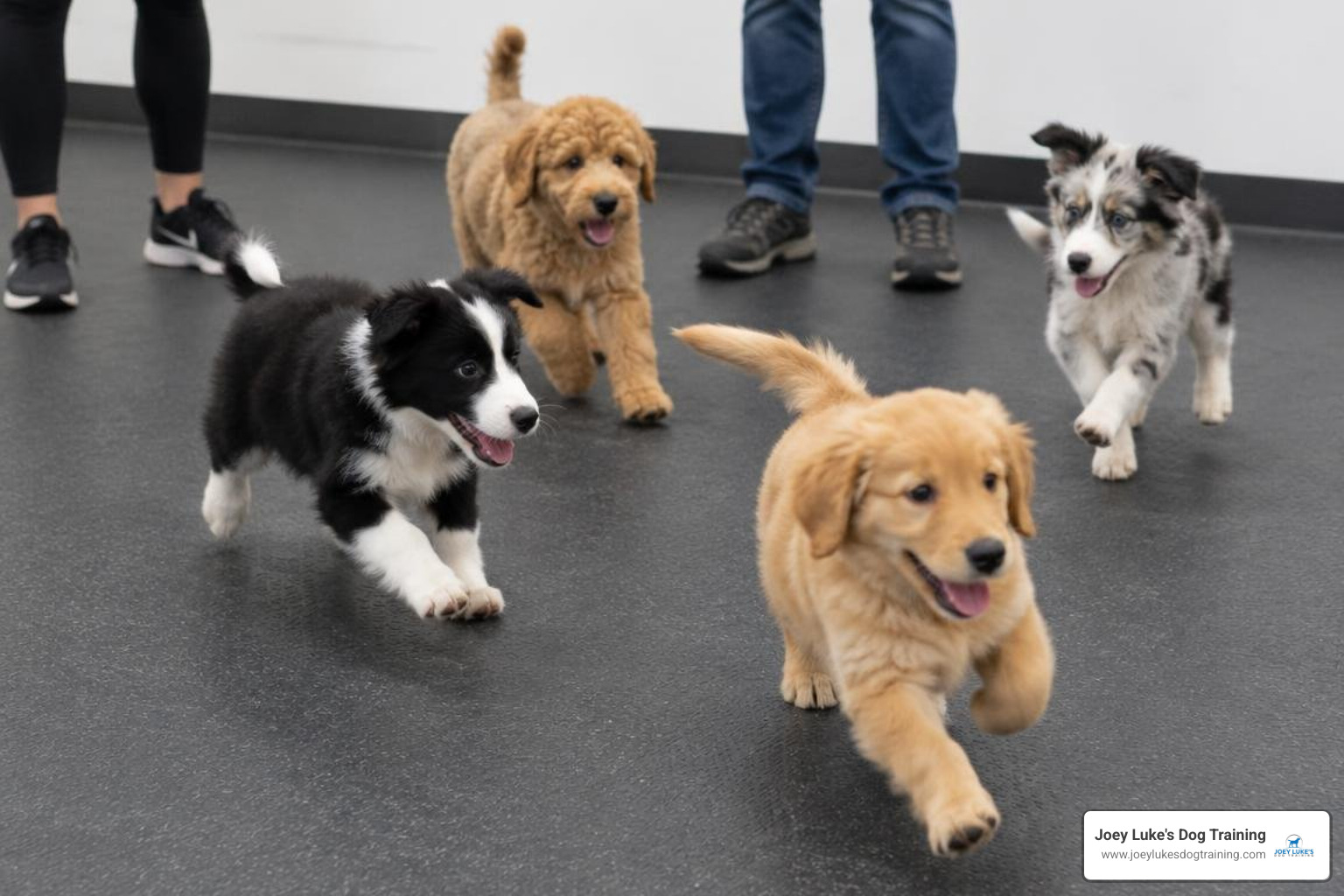
Group classes are fantastic for socialization. They allow your puppy to learn how to focus around the distraction of other dogs and people in a controlled environment. A typical class meets once a week for about an hour, running for four, six, or eight sessions. In these classes, you will work on basic commands like sit, down, stay, and walking on a loose leash. It is a great way to build social skills, but you will not get highly customized attention for specific behavioral issues at home.
Private Lessons
Private lessons offer a much higher level of customization. A trainer will work with you either in your home or at their facility, focusing entirely on your specific goals and challenges. This format is ideal if your puppy is struggling with housebreaking, crate training, or excessive barking in your living room. It allows us to address the exact environment where the behaviors are happening.
Board and Train Programs
Board and train programs are an intensive option where your puppy stays with a trainer for a set period, often from one week to several weeks. During this time, the trainer handles the heavy lifting of daily training sessions, environmental exposure, and habit building. When your puppy returns home, the trainer works with you to ensure you can maintain the new behaviors.
If you are looking for comprehensive puppy development that covers all these bases, you can learn more about our structured Puppy Training programs.
In Michigan, you will find excellent examples of these formats across the state. For instance, some owners look into specialized facilities for residential options, while others prefer behavior focused centers for structured group environments.
When to Start Puppy Training in Michigan
We are often asked how early a puppy can start formal training. The short answer is: the day you bring them home!
While formal group classes usually require puppies to be at least 10 to 12 weeks old so they can receive their second round of vaccinations, you can start building great habits at home as early as 8 weeks. In fact, starting early is the best way to prevent common behavioral issues from taking root.
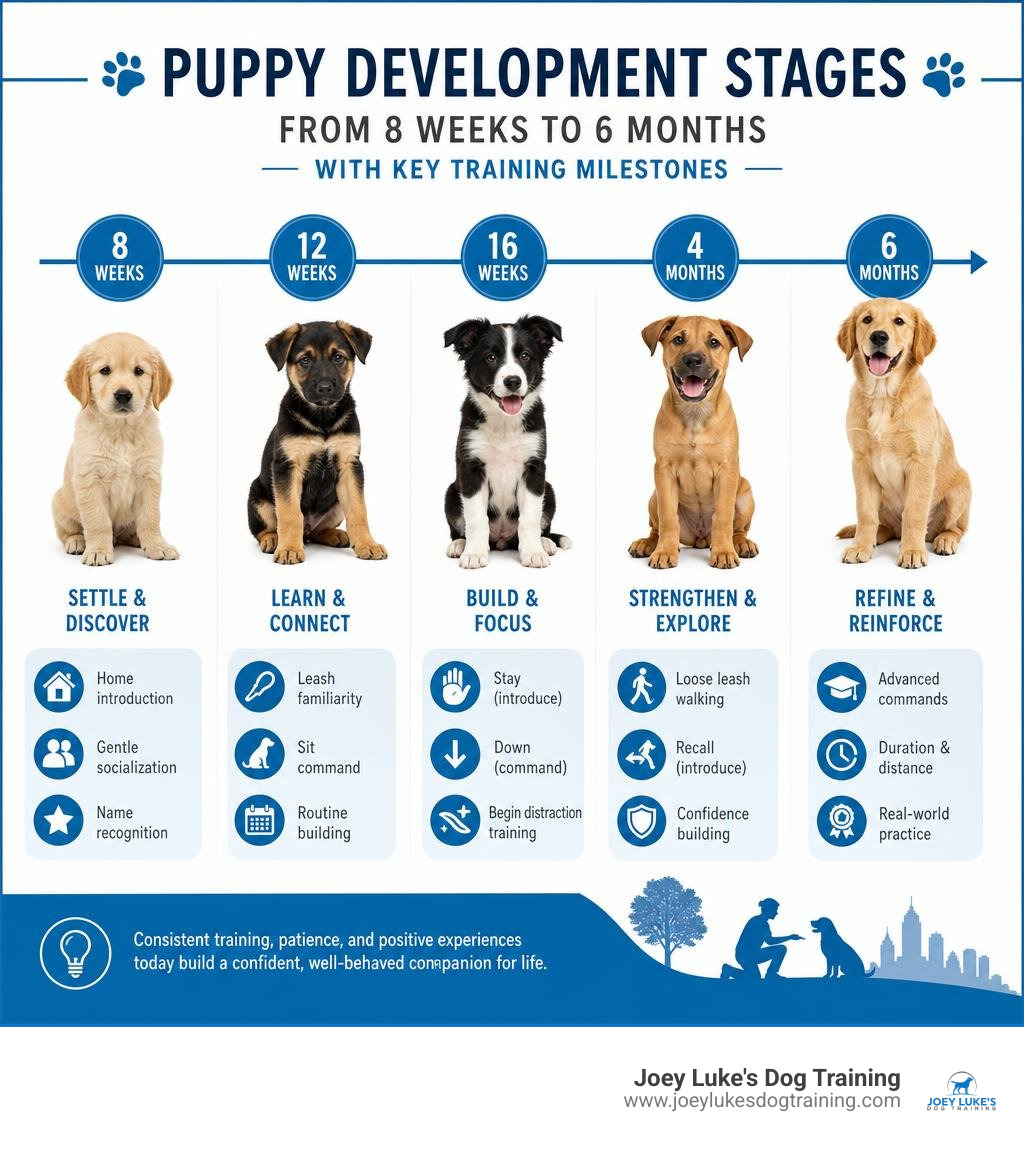
The puppy training timeline spans from 8 weeks to 6 months and includes several important milestones along the way. From 8 to 10 weeks, your focus should be on basic name recognition, beginning crate training, and starting housebreaking routines. Between 10 and 12 weeks, you can introduce simple commands like sit and down while continuing socialization in safe environments. From 12 to 16 weeks, your puppy enters a critical socialization period where exposure to new people, sounds, surfaces, and experiences is essential. Between 4 and 6 months, you can begin building on foundational skills with more structured obedience work, leash manners, and impulse control exercises.
Waiting too long to start training is one of the most common pitfalls for new owners. To make sure you are on the right track, take a look at our article on 3 Mistakes Families Make When Raising a Puppy.
When you are ready to take the next step and join a structured learning environment, you can explore our available Classes for Puppy Training to find a schedule that fits your life.
Addressing Common Puppy Behavior Challenges
Raising a puppy is incredibly rewarding, but it also comes with its fair share of frustrations. From middle of the night potty runs to sharp puppy teeth, challenges are a normal part of the process. The key is to address them with patience, consistency, and clear communication.
Here are the three most common challenges Michigan puppy owners face and how to handle them:
- Housebreaking: Consistency is the secret to housebreaking. Puppies have tiny bladders and need to go out frequently, especially after eating, drinking, playing, or sleeping. Establish a strict routine, use a consistent verbal cue, and reward your puppy immediately with praise and a treat when they do their business outside.
- Crate Training: A crate should always be a happy, safe space for your puppy, never a place of punishment. Feed your puppy their meals in the crate, leave fun puzzle toys inside, and keep the door open initially so they can explore it on their own terms.
- Impulse Control: Puppies are naturally impulsive. They want to jump on visitors, grab food off the counter, and sprint through open doors. You can teach impulse control through simple exercises like making your puppy sit and wait for their food bowl or waiting calmly at the door before going outside.
Barking is another common challenge that can quickly drive a family crazy. If your puppy has found their voice and is using it constantly, you will find practical, step by step advice in our guide on Puppy Training for Barking. For a deeper dive into managing vocal pups, check out our resource on Puppy Training Barking.
Frequently Asked Questions about Michigan Puppy Training
Navigating puppy development can bring up a lot of questions. Here are some of the most common questions we hear from Michigan dog owners.
What vaccinations does my puppy need before starting classes
To keep all puppies safe, reputable training facilities in Michigan enforce strict vaccination policies. Before your puppy can attend a group class or social event, they will typically need to show proof of:
- Their second series of distemper and parvo vaccinations
- A negative fecal test result within the last few weeks
- A bordetella kennel cough vaccination
- A rabies vaccination once they reach the appropriate age, usually around 16 weeks
For general vaccine guidance, the American Veterinary Medical Association offers helpful information for pet owners. Always follow your veterinarian's recommendations for your individual puppy.
For private, in home training sessions, you can often start earlier, even before the full vaccination series is complete, because your puppy will not be exposed to other dogs.
How much does puppy training cost in Michigan
The cost of puppy training in Michigan varies depending on the format, location, and length of the program.
Group classes typically range from $199 to $399 for a series of four to eight weekly sessions. In home private lessons often range from $225 for basic jumpstart packages to $525 or more for comprehensive multi session bundles. Premium immersion programs that are highly specialized and concierge style can range significantly higher depending on the level of care and duration of the stay.
Investing in training early is always more cost effective than trying to correct deeply ingrained behavior problems later in your dog's life.
Can I train my puppy during the cold Michigan winter
Absolutely! In fact, training during the winter is highly recommended because the lack of outdoor activity can lead to boredom and destructive behavior at home.
Many Michigan training facilities offer beautiful, climate controlled indoor spaces where your puppy can socialize and learn comfortably year round. If you prefer to stay warm at home, private in home lessons are a fantastic option. You can learn more about how we structure these sessions by exploring our Dog Training Lessons page.
If you live in the Northville area and want to learn more about how we help local families, you can read about our philosophy on Dog Training for Dogs in Northville MI. For families living in other parts of the state, you can also look into excellent regional resources to find professional support near you.
So what's next, if you're ready to start training your new puppy?
At Joey Luke's Dog Training, we believe that every puppy has the potential to become a wonderful, well behaved family companion. The effort you put into training, socialization, and building clear communication today will pay off for the rest of your dog's life.
We are here to help you navigate the ups and downs of puppyhood, transforming stressful moments into opportunities for growth and connection. If you are ready to start this journey with your pup, we invite you to visit our Puppy Training Landing Page to explore our programs, or go directly to our main Puppy Training page to get started. Let us help you unleash your dog's inner good boy!
