
What an Aussie Biting Problem Usually Means

An aussie biting problem usually comes from herding instinct, puppy teething, excitement, or being overtired - not a dog trying to be "bad." Australian Shepherds are built to notice motion, so running kids, flapping pant legs, squeals, and household chaos can switch on the urge to chase and nip faster than you can say, "Please stop herding your brother."
Quick answer: To stop Australian Shepherd biting, prevent access to moving kids when you can't supervise, freeze when nipping starts, calmly end the interaction, and reward the dog for choosing calm behavior or an appropriate toy. If bites are hard, break skin, happen around food or possessions, or come with fear signals, get qualified professional help promptly.
Puppy mouthiness often peaks during teething, roughly from 12 to 24 weeks, while herding behavior may become more noticeable during adolescence. Still, a nip can hurt, scare a child, or cause a fall. The cause matters because playful mouthing, overarousal, fear, and resource guarding don't all need the same plan.
Joey Luke's Dog Training serves families in Livonia, Michigan, and surrounding Detroit suburbs, with private lessons and board-and-train programs designed for homes where children and dogs share busy lives. I'm Joey Johncox, and after more than a decade helping rescue dogs and family pets, I've worked with hundreds of owners facing an aussie biting problem and the stressful, very real routines that come with it.
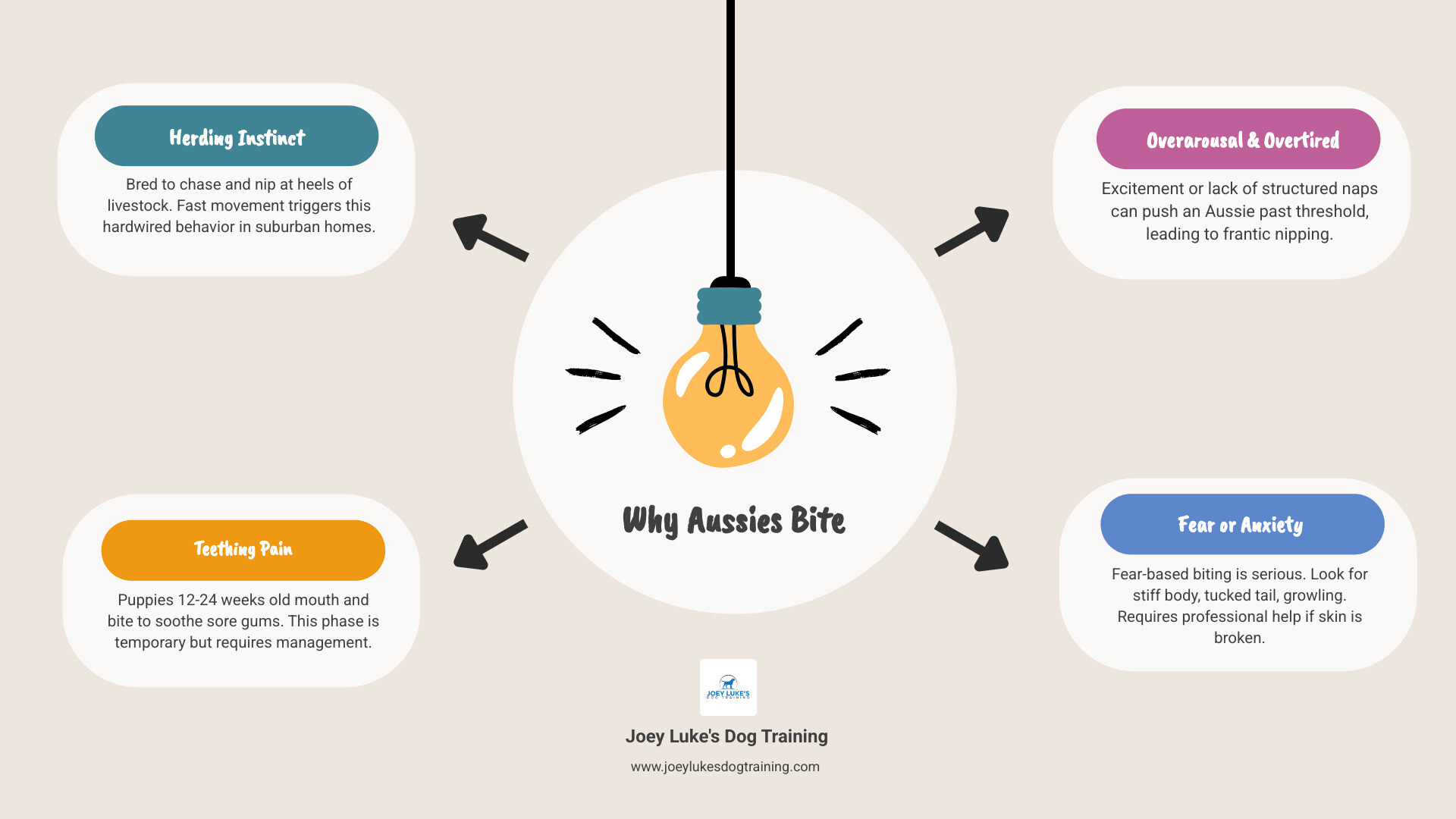
Why Your Australian Shepherd Keeps Nipping and Biting
Australian Shepherds weren't bred to sit quietly on couches all day. They were selectively developed in the American West to control stubborn livestock across rugged terrain. To move a thousand-pound steer, a working Aussie relies on rapid instinct: chase the movement, drop low, and nip at the heels to direct the herd.
When you bring that hardwired engine into a suburban household, your dog doesn't automatically switch off 150 years of selective breeding. Fast-moving children, darting cats, and running family members look just like livestock to an untrained Aussie's brain. Understanding this genetic gap is the first step in managing an aussie biting problem. You aren't fighting a malicious dog; you're guiding misdirected working instincts.
Decoding the Root Cause Behind an Aussie Biting Problem
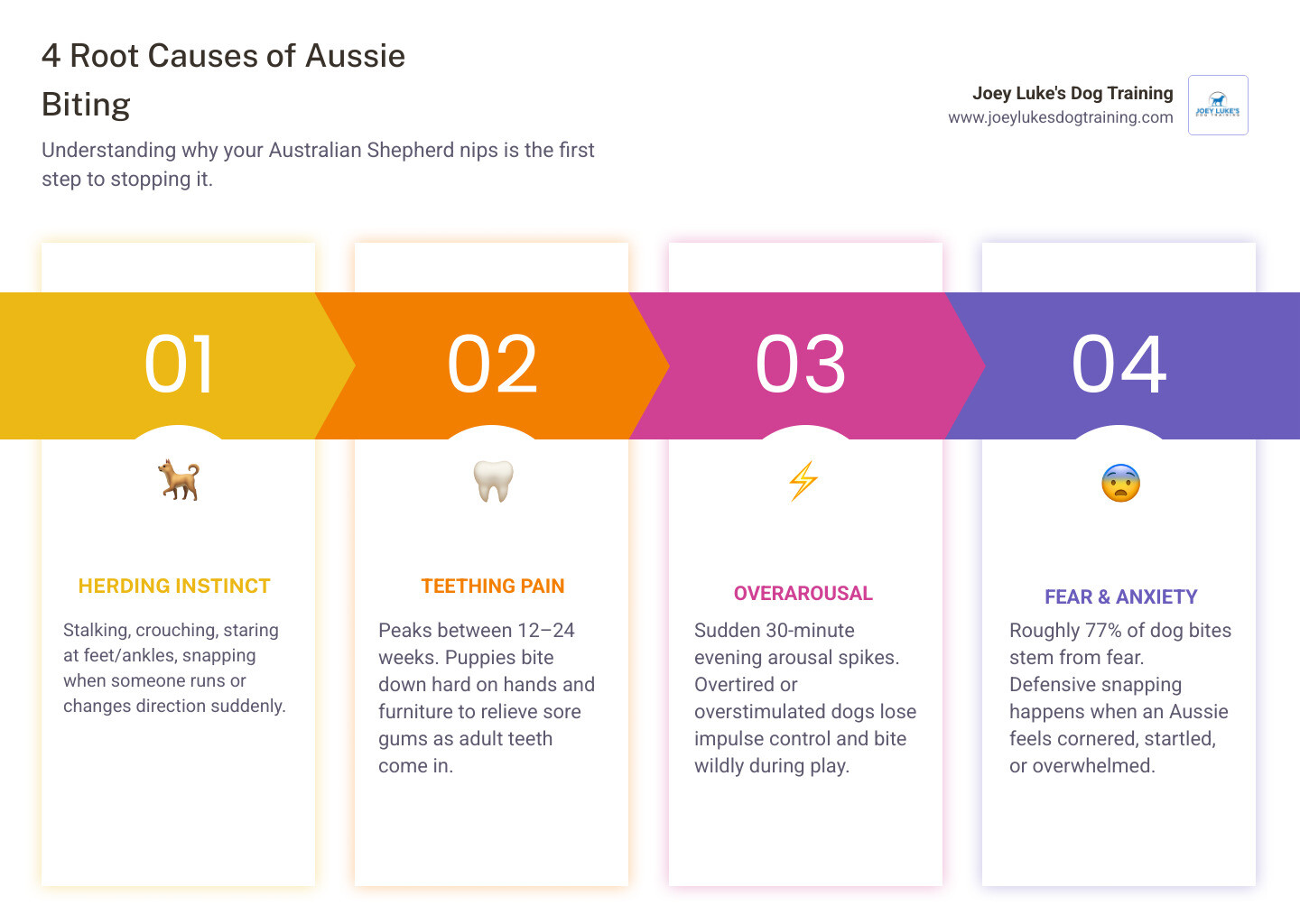
Before you can stop nipping, you've got to figure out why it's happening in the first place. An Aussie biting problem usually stems from one of four primary triggers:
- Herding Instinct: Your dog stalks behind family members, drops into a crouching posture, stares fixedly at feet or ankles, and snaps when someone runs or changes direction suddenly.
- Teething Pain: Between 12 and 24 weeks of age, mouth pain peaks. Young puppies bite down hard on hands, furniture, and sleeves to relieve sore gums as adult teeth come in.
- Overarousal and "Terror Phases": Aussies often experience sudden 30-minute spikes in arousal, especially during the evening. When they get overtired or overstimulated from high-speed fetch, their brain short-circuits, resulting in wild, flesh-drawing play biting.
- Fear and Anxiety: National dog bite statistics indicate that fear and anxiety account for roughly 77% of dog bites. When an Aussie feels cornered, startled, or overwhelmed by chaotic noise, defensive snapping takes over.
For more insights on managing young pups, check out this guide on Mini Aussie Puppy Biting: How To Stop Nipping And Biting.
Differentiating Play Mouthing from Aggressive Aussie Biting
It's vital to recognize whether your Aussie is engaged in normal mouthing or displaying true behavioral aggression. Playing pups usually have soft body language, loose tail wags, open mouths, and bouncy movements. Their bites might hurt because of razor-sharp puppy teeth, but there's no intent to cause harm.
Aggressive biting looks completely different. You'll notice rigid posture, hard eye contact, a closed mouth, lip curls, growling, or stiffening over food, toys, or resting spots. If your dog is snapping out of resource guarding or fear, take a look at our specialized Aggressive Dog Training services to keep everyone safe.
Understanding the distinction between arousal and aggression helps prevent costly mistakes. To learn more about identifying bite types, read Why Does My Aussie Bite So Much? 7 Reasons And 3 Bite Types. U.S. dog bite reports have recorded 38 serious attacks and even 1 fatality tied to Australian Shepherd bites, so addressing bite mechanics early isn't optional.
How to Solve an Aussie Biting Problem Around Children and Family
Children are natural trigger buttons for herding dogs. Kids run unpredictably, jump, and make high-pitched squeals. To an Aussie, a running toddler is a sheep straying from the flock.
Stopping an aussie biting problem around children requires a two-pronged strategy: controlling the environment so your dog can't rehearse bad habits, and teaching your children how to interact safely.
Actionable Training Steps to Fix an Aussie Biting Problem
Here's our step-by-step framework to curb unwanted biting and build strong impulse control:
- Prevent Rehearsal with Management: Use baby gates, exercise pens, and crates to keep your Aussie separate from children during high-energy times, like morning routines or after school.
- Use an Indoor House Line: Attach a lightweight, 6-foot leash to your dog's harness while indoors. This lets you gently gain control without grabbing the collar or triggering a game of chase.
- Teach Kids to "Be a Tree": Teach your children that if the dog runs toward them or starts nipping at heels, they must stop moving immediately, fold their arms across their chest, look at the sky, and stay silent. Stopping motion removes the reward for the dog's herding drive.
- Catch the Stare, Not the Nip: Watch for early warning signs like crouching, tense muscles, or intense eye contact. Intervene with a distraction or high-value treat before your Aussie actually lunges.
- Train a Solid "Leave It" and Impulse Control: Reward your dog for turning away from moving objects. You can find detailed steps in this guide on Australian Shepherd Nipping Children: How to Stop It Fast.
- Offer Legal Outlets: Give your dog appropriate chews like frozen stuffed toys or bully sticks to satisfy their oral fixations safely.
When you're working on basic obedience foundations, check out these helpful Dog Training Tips to streamline your daily routines.
Immediate Steps to Take When an Aussie Nips Someone
When a nip happens, your immediate response dictates whether the behavior continues or stops over time:
- Freeze instantly: Avoid pulling your hand away quickly or kicking your feet back, which escalates chase drive.
- Don't yelp or scream high-pitched "Ow!": High-pitched noises sound like squeaking prey or distressed livestock to herding breeds, often exciting them further.
- Execute a Reverse Timeout: Instead of putting the dog away, calmly step over a baby gate or close a door between you and the dog for 20 to 30 seconds. This teaches your Aussie that biting makes their fun human disappear immediately.
- Redirect gently: Once the dog settles, offer a durable chew toy or ask for a simple sit before resuming interaction.
For a step-by-step video demonstration of interrupting these behaviors, watch How To Stop Your AUSTRALIAN SHEPHERD BITING.
Environmental Management and Daily Exercise Needs

An under-exercised Aussie will almost always develop behavior issues. Pent-up physical energy and mental boredom transform directly into heel nipping, excessive barking, and destructive chewing.
Aussies require 1 to 2 hours of active physical movement daily, paired with 30 to 60 minutes of focused mental stimulation. Physical exercise alone won't solve an aussie biting problem—a physically fit but mentally bored Aussie just has the endurance to bite your heels for longer!
Combine physical outlets with brainwork:
- Dog Sports and Herding Games: Flirt poles, herding balls, and Treibball give your dog a designated outlet for their chase instincts.
- Enrichment Feeding: Replace standard food bowls with puzzle toys, lick mats, and snuffle mats to work their brain during mealtime.
- Structured Naps: Overstimulated puppies bite because they're overtired. Ensure your young Aussie gets 16 to 18 hours of sleep per day using quiet crate sessions.
If you're raising a young pup alongside these exercise routines, review our guide on How to Stop Australian Shepherd Biting(Puppy Training Guide).
Frequently Asked Questions About Aussie Biting
At what age do Australian Shepherds usually stop biting?
Most Aussie puppies show major improvements in play biting between 5 and 7 months of age as their adult teeth finish coming in. However, herding-driven nipping doesn't naturally disappear with age because it's an inherited genetic drive. Adolescence (around 6 to 18 months) often brings a temporary resurgence in nipping if rules aren't strictly maintained across the household.
What are the best alternative dog breeds for families with young children?
If you haven't brought an Aussie home yet and worry about high working drives around toddlers, consider breeds with naturally lower chase instincts:
- Golden Retrievers and Labrador Retrievers: Renowned for gentle, forgiving mouth control and high tolerance for family noise.
- Cavalier King Charles Spaniels: Excellent small companion pets with very low herding drives.
- Bernese Mountain Dogs: Calm, affectionate giants that offer high patience levels around children.
When should you contact a professional trainer for an Aussie bite issue?
You should seek professional support immediately if:
- Bites break human skin or leave deep bruising.
- The biting occurs alongside resource guarding over food, toys, or spaces.
- Your dog shows fear-based reactivity toward family members or strangers.
- Children in the household are becoming afraid to walk around the dog.
If you're struggling with severe behavioral triggers, consulting a professional Dog Behaviorist gives you a customized roadmap to restore safety.
Realizing Long-Term Peace with Your Australian Shepherd
Overcoming an aussie biting problem takes time, clear boundaries, and consistent effort from everyone in your home. By fulfilling your dog's need for physical movement, providing brain games, and enforcing calm behavior around kids, you can successfully redirect those powerful herding instincts into gentle companionship.
When family schedules get packed, traditional weekly group classes can be tough to stick with. Private lessons offer flexible scheduling that fits right into busy family life, while board and train programs align seamlessly with existing summer travel boarding budgets, giving your dog immersion training while you're away.
Joey Luke's Dog Training serves families in Livonia, Michigan and surrounding Detroit suburbs, specializing in households with children and dogs, offering board and train programs and private lessons. If you're ready for personalized support from a dedicated Dog Behaviorist, reach out to us today so we can help you transform your Aussie into a calm, reliable family pet.
